







Amy Moyi

Kajiado residents urged to embrace healthy eating to curb rising non-communicable diseases

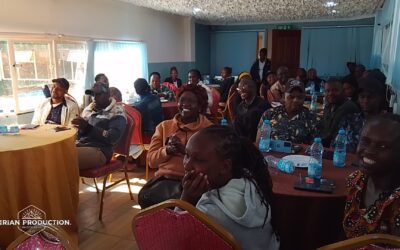
By Amy Moyi Residents of Kajiado county have been urged to embrace healthy eating habits and make informed food choices as part of efforts to prevent non-communicable diseases (NCDs). The call was made during a World Food Day celebration organised by the Kajiado County NCDs Group in collaboration with the Non-Communicable Diseases Alliance of Kenya(NCDAK) which brought together community groups, health officials, government representatives and other stakeholders to promote healthier communities. The event, held in Kiserian town under the theme “Our Food, Our Health,” was part of activities marking World Food Day, whose global theme this year was “Innovate Today, Nourish Tomorrow.” Participants were sensitised on the importance of healthy diets, food safety and nutrition with a focus on how everyday food choices can contribute to the prevention of conditions such as hypertension and diabetes. Patriciah Ngina, an official with the Kajiado NCDs Chapter, said the event was organised to educate residents on the importance of eating healthy and understanding the relationship between diet and non-communicable diseases. “We saw it fit to come here and educate people about the importance of eating healthy. Some of the things that we eat on a daily basis that we think are not harmful are really pushing us to NCDs,” said Ngina. She said participants were encouraged to understand what to include in their daily meals and what to look out for when purchasing food. Ngina cautioned against excessive salt and sugar consumption as well as processed foods. Public health officer Frankline Lelion said the interactive session also focused on food safety particularly the importance of ensuring that food products consumed by the public meet government certification requirements. He said participants were equipped with knowledge to help them identify certified and valid products when shopping in supermarkets and local shops. Lelion also highlighted the importance of food fortification like the addition of vitamin A to cooking oil as part of efforts to improve nutrition. He said hypertension is a major concern in Kajiado county with an estimated 29,000 or more cases while diabetes cases were also increasing. Other conditions of concern included cardiovascular diseases and anaemia particularly in rural parts of the county. “We are really trying to enlighten the population on what they need to eat to reduce these NCDs,” said Lelion. Community health promoter Jennifer Angulu said the training had reinforced the importance of traditional foods and healthier diets in preventing diabetes and high blood pressure. She noted that NCDs not only affect the health of individuals but can also deepen poverty in cases where the breadwinner requires long-term treatment and medication. Angulu said the knowledge gained during the event would help community health workers educate residents on how to prevent and manage the conditions. For some participants, the discussions were also an opportunity to highlight the challenges faced by people living with chronic illnesses. Peter Mutura, who said he had experienced eye pressure and high blood pressure, recounted being warned by a doctor that he was at risk of suffering a stroke. He said accessing treatment remained difficult because of the cost of hospital visits and the unavailability of medication. Mutura urged residents to take health awareness messages seriously and called for greater attention to the challenges faced by patients managing chronic conditions. “We need to listen to doctors and organisations creating health awareness,”said Mutura. The event brought together representatives from SHOFCO Kajiado, the Police Youth Initiative, Kiserian youths, Youth Waves, Kajiado Ma Hopes, the Kajiado County Government, the Kajiado Health Committee, the Ministry of Health, area administration and the county education office. The Kajiado County NCDs Group said the celebration was also an opportunity to strengthen partnerships between community organisations and government stakeholders in advancing public health awareness. The group, a beneficiary of a seed grant, acknowledged the support of the Non-Communicable Diseases Alliance of Kenya (NCDAC), its mother organisation, for its continued guidance, mentorship and investment in community-led initiatives.

Read Full News

Debt crisis undermining climate action as agroecology emerges as alternative for African farmers

Teresa Anderson, Global Lead on Climate Justice at ActionAid By Amy Moyi African countries grappling with mounting debt are increasingly struggling to finance climate action leaving vulnerable communities exposed to extreme weather events while limiting investment in sustainable food production, climate and food systems experts have warned. Teresa Anderson, Global Lead on Climate Justice at ActionAid, has highlighted the growing connection between the climate crisis and the debt burden facing countries in the Global South arguing that the two challenges are reinforcing each other and undermining development efforts. Anderson said debt is worsening the climate crisis in three major ways: leaving countries exposed to climate impacts, preventing governments from investing in the transition to sustainable economies and increasing pressure to expand environmentally destructive industries. She argued that addressing the debt crisis including through debt cancellation should be recognised as an important climate solution because governments cannot adequately respond to climate threats when much of their national revenue is committed to servicing loans. Anderson has illustrated the scale of the challenge through examples from across Africa. In Malawi, the government was projected to spend 70 per cent of its national annual budget on debt repayments in 2026 after successive destructive cyclones forced the country to spend hundreds of millions of dollars on recovery. Zambia also spent more than 60 per cent of its government budget and 70 per cent of its revenue on debt repayments leaving only 0.32 per cent of total government expenditure available for climate-related activities. The debt crisis further limited the country’s ability to invest in preparedness and adaptation during droughts experienced in 2024 and 2025. In Senegal, debt servicing was estimated at 600 times government spending on climate action leaving key initiatives aimed at strengthening resilience, improving food security and reducing emissions through agroecology without adequate funding. Similarly in Mozambique, successive cyclones, droughts and floods have pushed the country deeper into debt. Mozambique spent 117 times more on debt repayment than on climate action while facing pressure to exploit its gas resources to meet financial obligations. According to data from Development Finance International’s Debt Watch Database, 93.5 per cent of the world’s most climate-vulnerable countries are either in debt distress or at risk of falling into it. The analysis further showed that these countries were spending an average of 65 per cent of their national revenues on debt servicing leaving only about a third for public services, development and climate action. In 2026, climate-vulnerable countries were collectively spending nearly 25 times more on debt repayments than on climate action, a situation that threatens their ability to implement even basic climate commitments. As African governments struggle to mobilise resources for climate action, agroecology is emerging as an important approach to strengthening food systems, reducing agricultural production costs and improving household productivity. Evidence presented on Kenya’s household productivity showed that agroecological practices delivered 37.8 per cent higher broad productivity per hectare driven by savings on agricultural input costs. The finding points to the potential economic benefits of farming approaches that reduce dependence on expensive external inputs while making better use of locally available resources. For smallholder farmers, particularly those operating under increasingly unpredictable weather conditions and rising production costs, reducing expenditure on farm inputs can make a significant difference to household incomes and the sustainability of agricultural production. However, agroecology’s contribution to food security goes beyond increasing agricultural productivity or the quantity of food produced. ActionAid Tanzania Country Director Bavon Christopher has called for a shift from measuring food security through calories alone to prioritising access to healthy and diverse diets. ActionAid Tanzania Country Director Bavon Christopher Christopher argued that investment in food systems should extend beyond agricultural production to support the entire food pathway including seed diversity, farmer’s knowledge, post-harvest systems, school meals and public procurement. He emphasised the need to diversify food systems and fund the different stages that determine what food reaches consumers, rather than concentrating resources primarily on increasing production. The approach recognises that food security is not simply about producing more food but also ensuring that households can access nutritious and diverse diets. Agroecology can contribute to this transformation by supporting agricultural diversity, strengthening farmer’s knowledge and reducing dependence on costly external inputs. Christopher also pointed to the gap between African governments agricultural financing commitments and actual budget allocations. Under the Maputo/Malabo Agriculture Target, African countries committed to allocating at least 10 per cent of their total public budgets to agriculture. However, most countries continue to fall short of this target with agroecology receiving only negligible fractions of available agricultural funding. This funding gap raises concerns about the extent to which governments are prioritising sustainable agricultural systems despite their potential contribution to food security, climate resilience and rural livelihoods. The challenge is compounded by debt obligations that leave governments with limited fiscal space to invest in agricultural transformation. Anderson’s highlighted this contradiction through the example of Senegal where government initiatives designed to strengthen resilience, improve food security and reduce emissions through agroecology remain unfunded amid high debt-servicing costs. Together, the findings point to the need for governments to reconsider not only how much they invest in agriculture but also where that money goes and which food systems receive priority.

Read Full News

Matasia to host free medical camp offering surgeries and health screenings

Residents of Matasia and the wider Kajiado North Sub-county are set to benefit from a free medical camp scheduled for Saturday, August 8, offering a wide range of healthcare services aimed at improving access to treatment and early disease detection. The one-day outreach that will be held at Matasia Health Centre, is a joint initiative between the Kajiado County Government and Kingdom Mysteries International (KMI), a United States-based humanitarian organization. Patients will receive free essential health services including medication, dental care, cataract surgeries, minor surgical procedures, circumcision, prostate cancer screening, cervical cancer screening and referrals for patients requiring specialised treatment. Surgical procedures such as removal of lipomas, keloids and correction of certain congenital conditions including fused fingers will also be provided. Speaking ahead of the event, Reverend Ruth Ngigi of Kingdom Mysteries International said the medical camp is intended to ease the financial burden that many families face when seeking healthcare while ensuring that vulnerable members of the community receive timely treatment. “We are coming to help our people. I know the times are difficult and a little something can go a long way. Tell a friend, invite your neighbour especially if they have lipomas which are prevalent in Kajiado county. We will remove them free of charge, ” said Reverend Ngigi.  County officials have welcomed the partnership describing it as an important step in expanding healthcare access through collaboration with development partners. Kajiado County Chief Officer for Public Health and Sanitation Eddie Kimani said the county government is committed to working with organisations that complement public health services and bring care closer to communities. He encouraged residents from across Kajiado North experiencing any health concerns to take advantage of the opportunity to receive free medical check-ups and treatment. Kimani also appealed to men to attend the camp noting that many delay seeking medical attention until illnesses become advanced. He said the outreach will provide prostate cancer screening alongside other medical services. “Men do not seek medical services as much as they should. This is an opportunity for them to be tested for prostate cancer and other medical conditions,” said Kimani. Registration at the medical camp will begin at 6am and close at 3pm on a first-come basis. Patients who require advanced care will be referred through an established referral system helping ensure continuity of treatment after the event. Kingdom Mysteries International (KMI), which is organising the event in collaboration with the Kajiado County Government, is a Washington State-based Christian humanitarian organisation that conducts free medical missions, community empowerment programmes, education initiatives and humanitarian projects in underserved communities across East Africa and the United States. 

Read Full News

Immaculate Salaon installed as president of Rotary Club of Ngong Hills 

Immaculate Salaon has officially been installed as the new president of the Rotary Club of Ngong Hills during a colourful ceremony held at the KCB Leadership Centre in Karen.  The event drew a large turnover of rotarians and rotaractors as well as members of the Rotary Club of Ngong Hills. The installation ceremony marked the official handover of leadership from the outgoing president to Salaon, who will serve as club president for the 2026/2027 Rotary year.  In one of the most symbolic moments of the event, the outgoing president presented her with the presidential chain, signifying the formal transfer of leadership and responsibility. Salaon later took the oath of office, committing herself to uphold Rotary’s values and lead the club in advancing community service initiatives throughout her one-year term. Members of her board of directors, who will support her in implementing the club’s programmes and activities, also took the oath of office during the ceremony. Speaking after her installation, Salaon reaffirmed the club’s commitment to supporting vulnerable members of the community, particularly children from disadvantaged backgrounds. “We will continue paying school fees for the 14 vulnerable children currently under the club’s education support programme because every child deserves an opportunity to access quality education regardless of their circumstances,” Salaon said. Salaon has pledged to build on the achievements of previous administrations while expanding the club’s impact through sustainable community service projects. The event also celebrated the achievements of the outgoing leadership and recognised its contribution to community development projects and successful Rotary initiatives over the past year. As president, Salaon will lead the Rotary Club of Ngong Hills in implementing projects aligned with Rotary’s areas of focus in the 2026/2027 rotary year. Her installation marks the beginning of a new chapter for the club as it seeks to strengthen partnerships and expand its reach in serving communities across Ngong and beyond. 

Read Full News

Oloolua nine-storey building collapse linked to negligence by parliamentary report

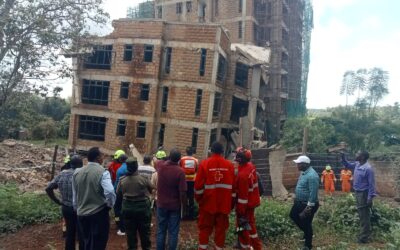
A parliamentary report has uncovered a series of regulatory breaches and construction failures that led to the collapse of a multi-storey building under construction in Ole Nairi, Kajiado North constituency in May this year. Presenting the findings before the National Assembly, the Chairperson of the Departmental Committee on Housing and Public Works said investigations pointed to widespread non-compliance and enforcement lapses in the construction of the building. The report highlighted the following key findings: 1. Structural deficiencies and poor workmanship were identified as the primary causes of the collapse with investigators finding serious weaknesses in the building’s construction. 2. The building exceeded its approved height. Although the project had received approvals from the Kajiado County Government, the National Environment Management Authority (NEMA) and the National Construction Authority (NCA), the structure had exceeded its approved specifications of an eight-storey development. Inspectors established that it had reached nine floors by the time it collapsed. 3. Regulatory orders were ignored. The report found that construction continued despite concerns raised by authorities and directives issued against the project. 4. The project lost professional supervision months before the collapse. The project engineer Ngugi Jacob Kibe withdrew his indemnity in June 2025, while the architect M.Kihara formally exited the project in January 2026. 5. Construction proceeded without consultants on site. Subsequent inspections revealed that the project was being undertaken without the supervision of the appointed engineer and architect prompting the National Construction Authority to issue a suspension order. 6.Construction allegedly continued despite the directive by the National Construction Authority had suspending the project. 7. The contractor was properly registered. The State Department clarified that the contractor held a valid National Construction Authority licence contrary to claims that an unregistered contractor was involved. The developer was identified as Matthew Kipkoech Keter. 8. Claims of flight path restrictions could not be substantiated. Investigators found no evidence that Ole Nairi is officially designated as a flight path zone restricted to four-storey developments. 9. The project had obtained all the required approvals. The development had secured approvals from the Kajiado County Government, the National Environment Management Authority (NEMA) and the National Construction Authority which raised questions about enforcement and oversight. The report concluded that the collapse stemmed from a combination of structural weaknesses, violations of approved designs and regulatory failures. Funding and Enforcement Challenges The State Department admitted that it faces significant financial and legal challenges in preventing building collapses including inadequate resources for continuous inspections and the lack of a clear legal framework empowering multi-agency coordination. To address these shortcomings, the ministry has established a multi-sectoral consultative committee aimed at improving collaboration among agencies responsible for construction safety, disaster response and enforcement. Call for Accountability Kajiado North MP Onesmas Ngogoyo welcomed the report saying it had brought to light critical issues surrounding the construction of the building and underscored the need for stricter enforcement of building regulations.

Read Full News

Rampant strikes and destruction of property in high schools

By Teacher Alice Likimani IntroductionIn recent years, there has been an alarming increase in student strikes, unrest, and the destruction of school property in many high schools across the country. These incidents have negatively affected learning, led to loss of lives and property, and disrupted the smooth running of educational institutions. As a teacher, I have observed several factors that contribute to this unfortunate trend. Causes of student strikes and school arsonAbsent parenthoodMany parents have delegated their parental responsibilities to teachers, domestic workers and other caregivers. As a result, some children grow up without proper guidance, discipline, and moral values. Lack of parental involvement makes it difficult for students to develop respect for authority and responsibility. Irresponsible behaviour among learnersSome students are unwilling to take responsibility for their actions. They often blame teachers, school administration, or the system for challenges that could be solved through dialogue and personal accountability. Non-correctable childrenThere is an increasing number of learners who are unwilling to accept correction. Any attempt to guide or discipline them is viewed as harassment or victimization, leading to hostility towards teachers and school rules. Parents who do not want their children to workSome children grow up in homes where domestic workers perform all domestic duties. Consequently, these learners are not accustomed to responsibility, hard work, or following instructions. They may perceive school routines and duties as punishment rather than character-building exercises. Entitlement mentalitySome learners have been raised believing that they must always get what they want. When their demands are not met immediately, they resort to protests, violence, or destruction of property to force school administrations to comply. Undermining teachers’ authorityIn some cases, learners from affluent backgrounds feel superior to their teachers due to their family’s financial status. Such students may openly challenge authority and refuse to respect school regulations, making discipline difficult to enforce. National culture of demonstrations and destructionStudents often imitate what they observe in society. When national grievances are frequently expressed through demonstrations, strikes, and destruction of property, young people may perceive such actions as acceptable methods of resolving conflicts. Drug and substance abuseThe use of drugs and other substances among students contributes significantly to indiscipline. Drug abuse impairs judgment, promotes aggression, and increases the likelihood of violent behaviour, including participation in strikes and arson. Mitigation measures Conclusion The increasing cases of strikes and destruction of property in schools are a matter of great concern. While students must be held accountable for their actions, parents, teachers, communities, and government institutions all have a role to play in addressing the root causes. Through collective effort, proper guidance, and effective discipline, schools can once again become safe environments that promote learning, character development, and responsible citizenship. Disclaimer: The views and opinions expressed in this editorial are those of the author and do not reflect the views, editorial position or policies of Elveza Media.

Read Full News

Community stakeholders trained to champion disability inclusion

Over 300 participants including teachers, caregivers, health workers and paralegals are benefiting from an ongoing, free four-month training focused on neurodevelopmental disability support and inclusion under the Inclusive Futures Certificate Program. Implemented by the Orione Community Training Centre in collaboration with Manos Unidas Foundation Spain under the Pathways to Independence program, the initiative aims to strengthen community-based support systems, reduce stigma, promote inclusion and improve outcomes for children and adults living with disabilities.  The programme covers key areas including early identification and intervention, communication and language development, behaviour support, disability rights, inclusive education and caregiver empowerment. While speaking at the commencement of the training programme, speech and language therapist at Orione Community Training Centre Regina Mbugua said the training was necessitated by the pre-existing gaps in disability identification and intervention within the community. “Some of these children are in regular schools but the teachers do not have the knowledge on how to assist them. These children are also in churches but the people in charge do not have ways to include them. When it comes to intellectual disability which is not visible, we felt the need to create awareness and promote inclusion,” said Mbugua. Hellen Muthee and Gloria Wambua, Strathmore Law Clinic Gloria Wambua, from Strathmore University Law Clinic and a participant at the training said there is a huge legal gap in addressing the needs of people with disabilities. “Initially people with disabilities were ignored but now there is more awareness and call for inclusion. Strathmore University Law Clinic is currently working on a handbook to address these gaps,” said Wambua. To further address legal gaps for people with disability, Hellen Muthee from Strathmore University Law Clinic said the institution is working with county governments in the formulation of policies for early interventions for children with disability. Mbugua has also cited lack of awareness, misinformation and stigma as key challenges affecting people with disabilities and their caregivers. “Wrong information and lack of awareness cuts across professionals, parents to the members of the community. During assessments, stigma frequently emerges as a concern because it affects the mental and emotional well-being of parents and contributes to delayed intervention,” said Mbugua.  She has called on members of the community to stop stigma against children with disabilities and parents of children with disabilities citing that children with disability can live a normal life if given early intervention.  The training is expected to conclude in September. Participants who successfully complete the course will receive a certificate recognizing their enhanced knowledge and skills in disability inclusion and community practice.

Read Full News

Wambui urges Seki to champion residents rights on land rates

Lawyer Shadrack Wambui has called on Kajiado Senator Kanar Ole Seki to take a more active role in defending the rights and interests of ordinary residents on the contentious issue of land rates in Kajiado county. Speaking during a church service at PCEA Ongata Rongai Chapel in Kajiado North, attended by senator Seki alongside several other leaders from Kajiado county, Wambui has challenged Seki to ensure that the voices of local residents are heard and their concerns addressed at both the county and national levels. Addressing the congregation, Wambui has urged Seki to not only focus on national political issues like his support for the former deputy president Rigathi Gachagua,  but also on matters directly affecting the people who elected him. “You are our watchman. As our watchman, besides fighting for the rights of people at the top as we have seen you standing with Gachagua, try and fight for the rights of the people down here,” Wambui said. Wambui has further called on Seki to use his position in the senate to raise the matter and engage directly with the Kajiado county government in search of a fair and lasting solution citing that Seki has a duty to ensure that residents concerns are represented at the highest levels of government. The remarks by Wambui are centred on the ongoing dispute over land rates for both freehold and leasehold property owners in Kajiado county. The issue has become a major concern among residents following the passage of the Kajiado County Finance Bill 2026 by the Kajiado County Assembly. According to Wambui, the new legislation significantly increases land rates despite an earlier court ruling that declared a previous increase by the county government unconstitutional. Wambui argues that the county authorities should have respected the court’s decision instead of introducing another increase that places additional financial burdens on landowners. Through Sheria Mtaani Na Shadrack Wambui, Wambui has for the second time moved to court to challenge the implementation of the new rates in a case seeks to protect residents from what he has termed as unfair and unlawful charges imposed by the county government. Wambui has noted that many families and property owners are already struggling with the rising cost of living and should not be subjected to further financial pressure through increased land rates. He has maintained that public participation, transparency and adherence to court decisions must guide all county taxation policies. The land rates dispute continues to attract significant public interest across Kajiado county with many residents closely following the court proceedings and awaiting a final determination. 

Read Full News