








Kajiado residents urged to embrace healthy eating to curb rising non-communicable diseases

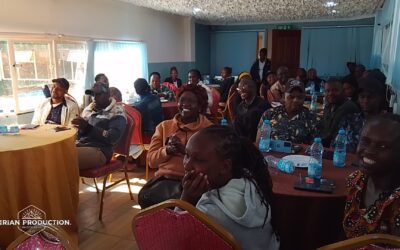
By Amy Moyi Residents of Kajiado county have been urged to embrace healthy eating habits and make informed food choices as part of efforts to prevent non-communicable diseases (NCDs). The call was made during a World Food Day celebration organised by the Kajiado County NCDs Group in collaboration with the Non-Communicable Diseases Alliance of Kenya(NCDAK) which brought together community groups, health officials, government representatives and other stakeholders to promote healthier communities. The event, held in Kiserian town under the theme “Our Food, Our Health,” was part of activities marking World Food Day, whose global theme this year was “Innovate Today, Nourish Tomorrow.” Participants were sensitised on the importance of healthy diets, food safety and nutrition with a focus on how everyday food choices can contribute to the prevention of conditions such as hypertension and diabetes. Patriciah Ngina, an official with the Kajiado NCDs Chapter, said the event was organised to educate residents on the importance of eating healthy and understanding the relationship between diet and non-communicable diseases. “We saw it fit to come here and educate people about the importance of eating healthy. Some of the things that we eat on a daily basis that we think are not harmful are really pushing us to NCDs,” said Ngina. She said participants were encouraged to understand what to include in their daily meals and what to look out for when purchasing food. Ngina cautioned against excessive salt and sugar consumption as well as processed foods. Public health officer Frankline Lelion said the interactive session also focused on food safety particularly the importance of ensuring that food products consumed by the public meet government certification requirements. He said participants were equipped with knowledge to help them identify certified and valid products when shopping in supermarkets and local shops. Lelion also highlighted the importance of food fortification like the addition of vitamin A to cooking oil as part of efforts to improve nutrition. He said hypertension is a major concern in Kajiado county with an estimated 29,000 or more cases while diabetes cases were also increasing. Other conditions of concern included cardiovascular diseases and anaemia particularly in rural parts of the county. “We are really trying to enlighten the population on what they need to eat to reduce these NCDs,” said Lelion. Community health promoter Jennifer Angulu said the training had reinforced the importance of traditional foods and healthier diets in preventing diabetes and high blood pressure. She noted that NCDs not only affect the health of individuals but can also deepen poverty in cases where the breadwinner requires long-term treatment and medication. Angulu said the knowledge gained during the event would help community health workers educate residents on how to prevent and manage the conditions. For some participants, the discussions were also an opportunity to highlight the challenges faced by people living with chronic illnesses. Peter Mutura, who said he had experienced eye pressure and high blood pressure, recounted being warned by a doctor that he was at risk of suffering a stroke. He said accessing treatment remained difficult because of the cost of hospital visits and the unavailability of medication. Mutura urged residents to take health awareness messages seriously and called for greater attention to the challenges faced by patients managing chronic conditions. “We need to listen to doctors and organisations creating health awareness,”said Mutura. The event brought together representatives from SHOFCO Kajiado, the Police Youth Initiative, Kiserian youths, Youth Waves, Kajiado Ma Hopes, the Kajiado County Government, the Kajiado Health Committee, the Ministry of Health, area administration and the county education office. The Kajiado County NCDs Group said the celebration was also an opportunity to strengthen partnerships between community organisations and government stakeholders in advancing public health awareness. The group, a beneficiary of a seed grant, acknowledged the support of the Non-Communicable Diseases Alliance of Kenya (NCDAC), its mother organisation, for its continued guidance, mentorship and investment in community-led initiatives.

Read Full News

Debt crisis undermining climate action as agroecology emerges as alternative for African farmers

Teresa Anderson, Global Lead on Climate Justice at ActionAid By Amy Moyi African countries grappling with mounting debt are increasingly struggling to finance climate action leaving vulnerable communities exposed to extreme weather events while limiting investment in sustainable food production, climate and food systems experts have warned. Teresa Anderson, Global Lead on Climate Justice at ActionAid, has highlighted the growing connection between the climate crisis and the debt burden facing countries in the Global South arguing that the two challenges are reinforcing each other and undermining development efforts. Anderson said debt is worsening the climate crisis in three major ways: leaving countries exposed to climate impacts, preventing governments from investing in the transition to sustainable economies and increasing pressure to expand environmentally destructive industries. She argued that addressing the debt crisis including through debt cancellation should be recognised as an important climate solution because governments cannot adequately respond to climate threats when much of their national revenue is committed to servicing loans. Anderson has illustrated the scale of the challenge through examples from across Africa. In Malawi, the government was projected to spend 70 per cent of its national annual budget on debt repayments in 2026 after successive destructive cyclones forced the country to spend hundreds of millions of dollars on recovery. Zambia also spent more than 60 per cent of its government budget and 70 per cent of its revenue on debt repayments leaving only 0.32 per cent of total government expenditure available for climate-related activities. The debt crisis further limited the country’s ability to invest in preparedness and adaptation during droughts experienced in 2024 and 2025. In Senegal, debt servicing was estimated at 600 times government spending on climate action leaving key initiatives aimed at strengthening resilience, improving food security and reducing emissions through agroecology without adequate funding. Similarly in Mozambique, successive cyclones, droughts and floods have pushed the country deeper into debt. Mozambique spent 117 times more on debt repayment than on climate action while facing pressure to exploit its gas resources to meet financial obligations. According to data from Development Finance International’s Debt Watch Database, 93.5 per cent of the world’s most climate-vulnerable countries are either in debt distress or at risk of falling into it. The analysis further showed that these countries were spending an average of 65 per cent of their national revenues on debt servicing leaving only about a third for public services, development and climate action. In 2026, climate-vulnerable countries were collectively spending nearly 25 times more on debt repayments than on climate action, a situation that threatens their ability to implement even basic climate commitments. As African governments struggle to mobilise resources for climate action, agroecology is emerging as an important approach to strengthening food systems, reducing agricultural production costs and improving household productivity. Evidence presented on Kenya’s household productivity showed that agroecological practices delivered 37.8 per cent higher broad productivity per hectare driven by savings on agricultural input costs. The finding points to the potential economic benefits of farming approaches that reduce dependence on expensive external inputs while making better use of locally available resources. For smallholder farmers, particularly those operating under increasingly unpredictable weather conditions and rising production costs, reducing expenditure on farm inputs can make a significant difference to household incomes and the sustainability of agricultural production. However, agroecology’s contribution to food security goes beyond increasing agricultural productivity or the quantity of food produced. ActionAid Tanzania Country Director Bavon Christopher has called for a shift from measuring food security through calories alone to prioritising access to healthy and diverse diets. ActionAid Tanzania Country Director Bavon Christopher Christopher argued that investment in food systems should extend beyond agricultural production to support the entire food pathway including seed diversity, farmer’s knowledge, post-harvest systems, school meals and public procurement. He emphasised the need to diversify food systems and fund the different stages that determine what food reaches consumers, rather than concentrating resources primarily on increasing production. The approach recognises that food security is not simply about producing more food but also ensuring that households can access nutritious and diverse diets. Agroecology can contribute to this transformation by supporting agricultural diversity, strengthening farmer’s knowledge and reducing dependence on costly external inputs. Christopher also pointed to the gap between African governments agricultural financing commitments and actual budget allocations. Under the Maputo/Malabo Agriculture Target, African countries committed to allocating at least 10 per cent of their total public budgets to agriculture. However, most countries continue to fall short of this target with agroecology receiving only negligible fractions of available agricultural funding. This funding gap raises concerns about the extent to which governments are prioritising sustainable agricultural systems despite their potential contribution to food security, climate resilience and rural livelihoods. The challenge is compounded by debt obligations that leave governments with limited fiscal space to invest in agricultural transformation. Anderson’s highlighted this contradiction through the example of Senegal where government initiatives designed to strengthen resilience, improve food security and reduce emissions through agroecology remain unfunded amid high debt-servicing costs. Together, the findings point to the need for governments to reconsider not only how much they invest in agriculture but also where that money goes and which food systems receive priority.

Read Full News