








Oloolua nine-storey building collapse linked to negligence by parliamentary report

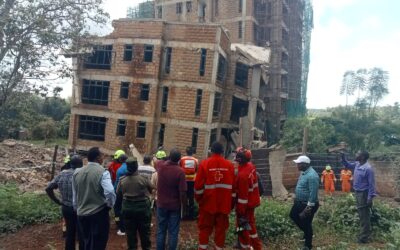
A parliamentary report has uncovered a series of regulatory breaches and construction failures that led to the collapse of a multi-storey building under construction in Ole Nairi, Kajiado North constituency in May this year. Presenting the findings before the National Assembly, the Chairperson of the Departmental Committee on Housing and Public Works said investigations pointed to widespread non-compliance and enforcement lapses in the construction of the building. The report highlighted the following key findings: 1. Structural deficiencies and poor workmanship were identified as the primary causes of the collapse with investigators finding serious weaknesses in the building’s construction. 2. The building exceeded its approved height. Although the project had received approvals from the Kajiado County Government, the National Environment Management Authority (NEMA) and the National Construction Authority (NCA), the structure had exceeded its approved specifications of an eight-storey development. Inspectors established that it had reached nine floors by the time it collapsed. 3. Regulatory orders were ignored. The report found that construction continued despite concerns raised by authorities and directives issued against the project. 4. The project lost professional supervision months before the collapse. The project engineer Ngugi Jacob Kibe withdrew his indemnity in June 2025, while the architect M.Kihara formally exited the project in January 2026. 5. Construction proceeded without consultants on site. Subsequent inspections revealed that the project was being undertaken without the supervision of the appointed engineer and architect prompting the National Construction Authority to issue a suspension order. 6.Construction allegedly continued despite the directive by the National Construction Authority had suspending the project. 7. The contractor was properly registered. The State Department clarified that the contractor held a valid National Construction Authority licence contrary to claims that an unregistered contractor was involved. The developer was identified as Matthew Kipkoech Keter. 8. Claims of flight path restrictions could not be substantiated. Investigators found no evidence that Ole Nairi is officially designated as a flight path zone restricted to four-storey developments. 9. The project had obtained all the required approvals. The development had secured approvals from the Kajiado County Government, the National Environment Management Authority (NEMA) and the National Construction Authority which raised questions about enforcement and oversight. The report concluded that the collapse stemmed from a combination of structural weaknesses, violations of approved designs and regulatory failures. Funding and Enforcement Challenges The State Department admitted that it faces significant financial and legal challenges in preventing building collapses including inadequate resources for continuous inspections and the lack of a clear legal framework empowering multi-agency coordination. To address these shortcomings, the ministry has established a multi-sectoral consultative committee aimed at improving collaboration among agencies responsible for construction safety, disaster response and enforcement. Call for Accountability Kajiado North MP Onesmas Ngogoyo welcomed the report saying it had brought to light critical issues surrounding the construction of the building and underscored the need for stricter enforcement of building regulations.

Read Full News

Rampant strikes and destruction of property in high schools

By Teacher Alice Likimani IntroductionIn recent years, there has been an alarming increase in student strikes, unrest, and the destruction of school property in many high schools across the country. These incidents have negatively affected learning, led to loss of lives and property, and disrupted the smooth running of educational institutions. As a teacher, I have observed several factors that contribute to this unfortunate trend. Causes of student strikes and school arsonAbsent parenthoodMany parents have delegated their parental responsibilities to teachers, domestic workers and other caregivers. As a result, some children grow up without proper guidance, discipline, and moral values. Lack of parental involvement makes it difficult for students to develop respect for authority and responsibility. Irresponsible behaviour among learnersSome students are unwilling to take responsibility for their actions. They often blame teachers, school administration, or the system for challenges that could be solved through dialogue and personal accountability. Non-correctable childrenThere is an increasing number of learners who are unwilling to accept correction. Any attempt to guide or discipline them is viewed as harassment or victimization, leading to hostility towards teachers and school rules. Parents who do not want their children to workSome children grow up in homes where domestic workers perform all domestic duties. Consequently, these learners are not accustomed to responsibility, hard work, or following instructions. They may perceive school routines and duties as punishment rather than character-building exercises. Entitlement mentalitySome learners have been raised believing that they must always get what they want. When their demands are not met immediately, they resort to protests, violence, or destruction of property to force school administrations to comply. Undermining teachers’ authorityIn some cases, learners from affluent backgrounds feel superior to their teachers due to their family’s financial status. Such students may openly challenge authority and refuse to respect school regulations, making discipline difficult to enforce. National culture of demonstrations and destructionStudents often imitate what they observe in society. When national grievances are frequently expressed through demonstrations, strikes, and destruction of property, young people may perceive such actions as acceptable methods of resolving conflicts. Drug and substance abuseThe use of drugs and other substances among students contributes significantly to indiscipline. Drug abuse impairs judgment, promotes aggression, and increases the likelihood of violent behaviour, including participation in strikes and arson. Mitigation measures Conclusion The increasing cases of strikes and destruction of property in schools are a matter of great concern. While students must be held accountable for their actions, parents, teachers, communities, and government institutions all have a role to play in addressing the root causes. Through collective effort, proper guidance, and effective discipline, schools can once again become safe environments that promote learning, character development, and responsible citizenship. Disclaimer: The views and opinions expressed in this editorial are those of the author and do not reflect the views, editorial position or policies of Elveza Media.

Read Full News

Community stakeholders trained to champion disability inclusion

Over 300 participants including teachers, caregivers, health workers and paralegals are benefiting from an ongoing, free four-month training focused on neurodevelopmental disability support and inclusion under the Inclusive Futures Certificate Program. Implemented by the Orione Community Training Centre in collaboration with Manos Unidas Foundation Spain under the Pathways to Independence program, the initiative aims to strengthen community-based support systems, reduce stigma, promote inclusion and improve outcomes for children and adults living with disabilities.  The programme covers key areas including early identification and intervention, communication and language development, behaviour support, disability rights, inclusive education and caregiver empowerment. While speaking at the commencement of the training programme, speech and language therapist at Orione Community Training Centre Regina Mbugua said the training was necessitated by the pre-existing gaps in disability identification and intervention within the community. “Some of these children are in regular schools but the teachers do not have the knowledge on how to assist them. These children are also in churches but the people in charge do not have ways to include them. When it comes to intellectual disability which is not visible, we felt the need to create awareness and promote inclusion,” said Mbugua. Hellen Muthee and Gloria Wambua, Strathmore Law Clinic Gloria Wambua, from Strathmore University Law Clinic and a participant at the training said there is a huge legal gap in addressing the needs of people with disabilities. “Initially people with disabilities were ignored but now there is more awareness and call for inclusion. Strathmore University Law Clinic is currently working on a handbook to address these gaps,” said Wambua. To further address legal gaps for people with disability, Hellen Muthee from Strathmore University Law Clinic said the institution is working with county governments in the formulation of policies for early interventions for children with disability. Mbugua has also cited lack of awareness, misinformation and stigma as key challenges affecting people with disabilities and their caregivers. “Wrong information and lack of awareness cuts across professionals, parents to the members of the community. During assessments, stigma frequently emerges as a concern because it affects the mental and emotional well-being of parents and contributes to delayed intervention,” said Mbugua.  She has called on members of the community to stop stigma against children with disabilities and parents of children with disabilities citing that children with disability can live a normal life if given early intervention.  The training is expected to conclude in September. Participants who successfully complete the course will receive a certificate recognizing their enhanced knowledge and skills in disability inclusion and community practice.

Read Full News

Wambui urges Seki to champion residents rights on land rates

Lawyer Shadrack Wambui has called on Kajiado Senator Kanar Ole Seki to take a more active role in defending the rights and interests of ordinary residents on the contentious issue of land rates in Kajiado county. Speaking during a church service at PCEA Ongata Rongai Chapel in Kajiado North, attended by senator Seki alongside several other leaders from Kajiado county, Wambui has challenged Seki to ensure that the voices of local residents are heard and their concerns addressed at both the county and national levels. Addressing the congregation, Wambui has urged Seki to not only focus on national political issues like his support for the former deputy president Rigathi Gachagua,  but also on matters directly affecting the people who elected him. “You are our watchman. As our watchman, besides fighting for the rights of people at the top as we have seen you standing with Gachagua, try and fight for the rights of the people down here,” Wambui said. Wambui has further called on Seki to use his position in the senate to raise the matter and engage directly with the Kajiado county government in search of a fair and lasting solution citing that Seki has a duty to ensure that residents concerns are represented at the highest levels of government. The remarks by Wambui are centred on the ongoing dispute over land rates for both freehold and leasehold property owners in Kajiado county. The issue has become a major concern among residents following the passage of the Kajiado County Finance Bill 2026 by the Kajiado County Assembly. According to Wambui, the new legislation significantly increases land rates despite an earlier court ruling that declared a previous increase by the county government unconstitutional. Wambui argues that the county authorities should have respected the court’s decision instead of introducing another increase that places additional financial burdens on landowners. Through Sheria Mtaani Na Shadrack Wambui, Wambui has for the second time moved to court to challenge the implementation of the new rates in a case seeks to protect residents from what he has termed as unfair and unlawful charges imposed by the county government. Wambui has noted that many families and property owners are already struggling with the rising cost of living and should not be subjected to further financial pressure through increased land rates. He has maintained that public participation, transparency and adherence to court decisions must guide all county taxation policies. The land rates dispute continues to attract significant public interest across Kajiado county with many residents closely following the court proceedings and awaiting a final determination. 

Read Full News