







Technology and trust are key to unlocking Africa’s cross-border trade, says Ecobank executive

By Amy Moyi Africa’s ability to scale cross-border trade depends on rebuilding trust between buyers, sellers, and financiers, according to Cyprian Rono, Director of Corporate and Investment Banking for Kenya and East Africa at Ecobank. In a statement on the future of African trade finance, Rono said many businesses remain hesitant to expand beyond familiar markets due to weak information on potential partners, fragmented regulatory regimes and documents that are difficult to verify across borders. “Traders are expected to honour contracts, deliver goods as promised, pay on time, and present authentic documentation yet they often lack reliable information on who they are dealing with. This heightens the risk of fraud, non-payment, and disputes ultimately discouraging businesses from venturing into new markets,” said Rono. However, Rono has noted that technology is increasingly bridging this trust gap. Artificial intelligence is allowing lenders to assess risk using alternative data, particularly for small and medium-sized enterprises (SMEs) without formal credit histories. At the same time, distributed ledger technologies are making shipping documents, certificates of origin and inspection reports tamper-proof while supply-chain visibility tools enable real-time tracking of goods. Rono has pointed to Ecobank’s Single Trade Hub as an example of how digital infrastructure can support safer trade. The platform provides a secure digital marketplace where buyers and sellers can transact with confidence even without prior relationships. “Our Trade Intelligence suite gives customers instant access to market data drawn from customs information and product classification tools across 133 countries. It has features such as import and export market classification, over 25,000 market and industry reports, customs duty calculators and universal customs codes which businesses can use to better assess opportunities, reduce compliance risks and optimise their supply chains,” added Rono. In addition, Rono has cited that beyond financing, SMEs also require advisory services, compliance guidance and secure platforms for partner verification and payment settlement. This is because many operate in cash-intensive cycles that require upfront payments to suppliers and logistics providers, making non-financial support just as critical as credit. He has emphasized the importance of trade fairs, industry forums and partnerships with chambers of commerce also play a role in strengthening trust networks in helping enterprises establish relationships that make cross-border trade viable. Looking ahead, Rono has stressed that Africa’s trade ambitions particularly under the African Continental Free Trade Area (African Continental Free Trade Area) depends on deeper financial integration. “Africa’s path toward meaningful trade integration begins with financial integration. The promise of AfCFTA will only be realised when enterprises can trade with confidence knowing payments will be honoured, partners verified and disputes resolved.” According to Rono, Africa must reduce reliance on external actors to finance its trade by strengthening African-led financial institutions and systems. “Africa’s economic transformation depends on trusted, digitally enabled African banks that understand the continent’s unique risks and opportunities. By building an African-led trade finance ecosystem, we can unlock liquidity, empower SMEs, retain more value locally, and accelerate Africa’s trade revolution driven by African institutions, African systems, and African ambition,” added Rono.
Read Full News

“Impact of One” rallies to tackle school dropouts in Iparakuo village, Kajiado

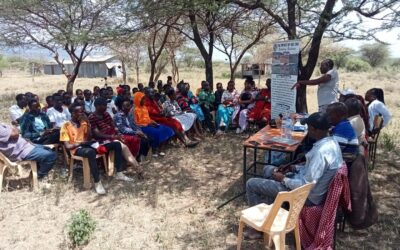
A coalition of community-based organizations, university students and school alumni has launched a push to address teenage pregnancies, early marriages and school dropouts in Iparakuo village, one of Kajiado West sub-county’s most marginalized villages. The sensitization forum, held at a local primary school in Iparakuo, brought together learners, parents and local leaders in an effort to confront social, cultural and infrastructural barriers that continue to undermine education in the area. Grace Naserian, a representative of Impact of One, said the village was deliberately selected after research identified it as a hotspot for teenage pregnancies, school dropouts and low civic engagement. “We came here to create awareness and to empower both learners and parents. Education is the foundation for everything, yet many families here lack access to information and support. This was also our way of giving back to the community and motivating learners to stay in school,” Naserian said. For Naserian, who has previously volunteered as a teacher at the school for two years after completing secondary education, she described the village as her home. “I have taught some of these learners’ older siblings. Seeing many of them now finishing form four and moving to college motivates me. This place matters to me, and that is why I feel responsible for its future,” said Naserian. Naserian also highlighted a shift in attitudes among parents, recounting conversations with older community members who regret missing out on education but are determined to keep their children in school. “It reflects how people now understand the value of education. Some parents even express a desire to return to school themselves. There are no limits to learning,” added Naserian. Josephine Leloi, an alumni of the school and one of the organizers, said the community continues to face multiple, interconnected challenges. She noted that boys often drop out of school to engage in small businesses or work as motorcycle taxi riders, while girls leave school due to pregnancy or early marriage sometimes by choice. “Pregnancy is not the only issue. Some girls do not see the importance of education and opt to get married even when their parents are trying their best to support them,” Leloi said. She added that the school lacks resources especially under the new competency-based education system where learners do not have access to a modern laboratory making it impossible to carry out mandatory practical lessons. Beyond academic challenges, Leloi has raised concerns over student safety as a result of frequent invasions by elephants which have destroyed water tanks and posed a threat to learners commuting to and from school, an issue she said has not been adequately addressed by authorities including the Kenya Wildlife Service. “Students live with constant fear. They worry not only about their studies but also about whether they will reach school or return home safely,” said Leloi. Dr. Emmanuel Wanyonyi, a lecturer at Daystar University and member of Sense Eight group, has cited the need to empower marginalized and vulnerable members of the society. “We started with Iparakuo because we received reports of the large number of high school dropouts especially with the young men who would rather be bodaboda riders than pursue education,” said Wanyonyi. During the visit, partners donated sanitary towels, food supplies and clothing to support learners during the long holiday period which is when the highest school dropout rates are observed. Samuel Saitoti, secretary of Impact of One, has said the organization focuses on youth empowerment, climate-smart agriculture for women and school retention programs. “Cultural practices can also contribute to school dropouts. After circumcision, some boys believe they are already men and lose interest in school. That is why mentorship and community involvement are critical. This engagement was successful because we involved students, parents, partners, ” said Saitoti. The sensitization forum aimed not only to highlight challenges but also to provide visible role models. With few graduates in the area, alumni involvement was intended to show learners that success is possible despite adversity. “This community needs hope and hope begins when learners see someone from here who made it,” concluded Leloi. By Amy Moyi

Read Full News

Naramat Junior Secondary and Senior School: Nurturing excellence in the heart of Matasia

By Amy Moyi Tucked within the vibrant community of Matasia in Kajiado North sub-county, Naramat Academy and Junior Secondary has grown into one of the region’s most respected educational centres, living up to its Maasai name Naramat that means “to nurture” by producing confident, disciplined and well-rounded learners. A school built on strong roots Naramat Senior School is an extension of the original Naramat Academy founded over twenty years ago. The school now accommodates preschool, Grades 1–6 in the academy section, Grades 7–9 in the junior school, and is gearing up to admit Grades 10–12 in the senior school. Deputy headteacher Veronica Irungu explains that the school, which now serves more than 700 students, began as Naramat Academy before expanding into a full junior secondary school and soon-to-be senior school. The school currently accommodates preschool to Grade 9 and is preparing to launch grades 10–12 next year which will incorporate the STEM and Social Sciences pathways in line with the Competency-Based Curriculum(CBC). The introduction of the Competency-Based Curriculum (CBC) has shaped much of Naramat’s recent expansion. According to Veronica, transitioning to the Competency-Based Curriculum required dedication and extensive training but the school embraced it by investing in qualified teachers, modern facilities and hands-on learning resources.   A Haven for Young Scientists One of the school’s strongest assets is its three fully equipped science laboratories. Head of Science Department Wilfred Nyairo has highlighted the wide range of apparatus including microscopes, reagents, voltmeters, ammeters, magnets, titration equipment and safety systems which allows learners to conduct practical experiments confidently in physics, chemistry or biology. Each lab accommodates 21 learners, enabling up to 63 students to perform scientific investigations simultaneously. As a result, Naramat’s science learners consistently excel in inter-school competitions. Safety is also non-negotiable. Every lab features emergency switches and fire extinguishers, all clearly marked. Digital learning at the core Technology is equally central to learning at Naramat. The spacious, internet-connected computer lab holds up to 50 students and supports both basic skills and advanced digital learning. ICT teacher Riziki has noted that students acquire skills in creating animations, games, coded projects and digital presentations which have helped them shine in ICT competitions over the past two years. Boarding and dining facilities: A home away from home For families seeking boarding facilities, the school offers modern, safe hostels for both boys and girls furnished with warm showers, tidy cubicles for four, supervised study times and full-time matrons. In addition, a 1,200-capacity dining hall ensures students enjoy balanced meals, with special diets offered when medically required. Beyond academics, Naramat emphasizes holistic development. Learners participate in basketball, swimming, chess, athletics, music and various co-curricular clubs. Students rotate activities every two terms to gain wider exposure before specializing. Strong academic performance Known for strong KCPE performance under the previous 8-4-4 education system with many students scoring above 400 marks, Naramat is confident in achieving excellent results under the CBC as well. “Naramat is a centre of excellence. We nurture every learner academically, socially and creatively to prepare them for a global future,” concluded Veronica.

Read Full News

Kajiado makes big strides in establishing GBV policy frameworks

Kajiado county has marked a pivotal moment in its fight against gender-based violence (GBV) with the launch of the Kajiado County Gender Based Violence Response and Prevention Policy, 2025. The policy, which was unveiled on 24th September 2025, represents a comprehensive framework designed to confront deeply rooted cultural practices and strengthen survivor support systems. The policy, which is tailored specifically to the socio-cultural context of Kajiado, is the result of a year-long collaborative effort spearheaded by the Forum for Women in Development Democracy and Justice (FODDAJ) in collaboration with International Rescue Committee (IRC), Irish Aid and other gender sector stakeholders. It was developed after extensive research and analysis of data from public health facilities, government databases and recovery centers. The new policy comes against a backdrop of alarming statistics that indicate the prevalence of female genital mutilation in Kajiado county is at 78 percent which is far higher than the national average of  21 percent. In the year 2024 alone, 3854 GBV cases were reported with the vast majority of those affected being women and adolescent girls. One of the policy’s standout features is its strong emphasis on prevention through community awareness initiatives, targeted school programs and campaigns to eradicate harmful practices form the backbone of this approach. The policy also recognizes that sustainable change cannot occur without the active involvement of men, boys, cultural leaders, and faith-based institutions which makes their participation essential in transforming entrenched norms and reshaping community attitudes toward GBV. On the response front, the policy outlines clear priorities including strengthening GBV recovery centers, enhancing access to medical and psychosocial support as well as expanding pathways to legal aid. A major advocacy point throughout the policy’s development was the establishment of publicly funded safe shelters. At present, the county relies heavily on privately owned facilities, leaving many survivors without immediate refuge. Improved coordination is another core focus with the policy aiming to reinforce the role of GBV technical working groups, streamline referral pathways, and promote inter-agency collaboration. The document also highlights the need for robust data systems noting that fragmented and inconsistent data collection has long hindered effective planning and monitoring. Subsequently, there are plans for a centralized GBV database developed in partnership with agencies such as the Kenya National Bureau of Statistics(KNBS) and Kenya National Human Rights Commission(KNHCR). Implementation of the policy in Kajiado county will be spearheaded by the County Department of Gender with support from multiple sectors and integrated into the County Integrated Development Plan. Funding is anticipated from county budgetary allocations, national government contributions and development partners. Key policy recommendations include appointing GBV focal persons across all administrative levels, expanding shelters through public–private partnerships, institutionalizing capacity building for frontline workers, and enacting a County GBV Bill to secure long-term financing. As Kajiado embarks on this roadmap, the policy lays the foundation for transformative change in the prevention of GBV and the protection of survivors. By Amy Moyi  

Read Full News

Body of a security guard found in a construction site

Workers in a Chinese managed construction site located along Hilltop road, Oloolua Ward, Kajiado North arrived at work yesterday morning 4th December 2025, only to discover the lifeless body of the site’s night watchman. The legal identity of the body is yet to be released to the public but construction workers told Elveza Media the deceased is a native of Samburu county and claimed to have moved to Kajiado county in search of employment. According to our sources who wished to remain anonymous for security reasons, the gang of thieves also injured another second guard before stealing construction equipment. “The gang took their time well! They attacked the guard at around midnight and packed the equipment into an alleged waiting vehicle until 5am in the morning.” The source who wished to remain anonymous said Those managing construction sites have been urged to beef up security, install enough lighting and ensure the safety of security guards is also considered. The Kenya’s private security industry is regulated by the private security regulation act, 2016 and the private security (general) regulations.  The enforcement of the regulatory framework, is a mandate of the Private Security Regulatory Authority (PSRA) Security guards in Kenya are banned from carrying firearms but security firms are mandated to provide protection tools such as good torches, pepper sprays, stab vests and communication devices. The welfare of the guards is well captured in the regulatory framework.  Employers must ensure that guards have essential amenities such as the toilet while on duty and are remunerated well financially and in accordance with the employment laws of Kenya.

Read Full News