








adminelveza

KPLC engages Ngong business community on power reliability, safety and customer service

Kenya Power and Lighting Company (KPLC) on Friday, October 16, held a consultative forum with small and medium sized enterprise (SMEs) owners from Ngong and surrounding areas to address electricity related challenges affecting businesses and to strengthen partnership with its customers. The meeting brought together KPLC officials led Ms. Tracy Konchellah who is incharge of the customer experience in Ngong office in partnership with ABSA Bank Ngong led by the Branch Manager Henry Muteti. Some of the concerns discussed during the meeting included power interruptions, electricity bills to safety, illegal connections and electricity poles obstructing roads. Speaking during the forum, Bishop Henry Omae warned against illegal electricity connections, saying they pose a serious threat to human life and property. He also raised concerns over power rationing and interruptions, noting that businesses dealing in fresh and perishable products, particularly milk, are among those most affected by unreliable electricity supply. Omae called on Kenya Power to intensify public awareness campaigns through community “barazas” to educate residents on electricity safety and the dangers associated with illegal connections. He said community based sensitisation would help residents understand the risks of unsafe electricity practices and encourage responsible use of power. The issue of electricity poles left standing in the middle of roads was raised during the meeting, with residents seeking intervention to improve road safety and accessibility. Karen Msombi, a Customer Experience Officer at KPLC’s Karen area office, acknowledged that the company was aware of cases where electricity poles remained on roads following construction works. Msombi explained that Kenya Power works with various stakeholders involved in road construction to ensure electricity infrastructure is addressed before projects begin. “As an organisation, KPLC partners with various stakeholders who undertake road construction so that we can work together. By the time construction begins, KPLC should have engaged the stakeholders on how poles along the road are going to be moved” Msombi said. She noted that where poles had not been relocated, it could indicate that Kenya Power had not been involved in the initial consultations with the relevant stakeholders. She pledged to follow up on the electricity pole left standing in the middle of Rubis to Jua Kali road in Ngong Town. “We will go back to the office, talk to the relevant department that is concerned with that issue, together with our boss, so that action can be taken to remove the pole from the road,” Msombi said. She emphasised the importance of cooperation between the utility company and the business community, noting that their shared success depends on working together. “For KPLC to succeed and for businesses to succeed, we have to work together,” Msombi said. Konchellah highlighted infrastructure and customer service improvements undertaken over the past year to strengthen electricity supply across Ngong Sub County and neighbouring areas. According to the company, the Ngong service area, which covers Ngong, Matasia, Kiserian, parts of Rongai and Kibiko, serves approximately 70,000 customer accounts, including prepaid and postpaid domestic consumers, small businesses and large commercial customers. She further said the company replaced more than 400 ageing wooden poles with concrete poles in Matasia, Kiserian and Oloolua to help reduce outages and improve network reliability. It also installed or upgraded 15 transformers in high growth areas, including Kibiko, Merisho and Nazarene, to address low voltage and overloading. “Additionally, approximately six kilometres of low voltage lines were upgraded from single phase to three phase electricity to support growing demand, particularly from businesses. Routine maintenance, including the tightening of loose connections at more than 120 substations, was also undertaken as part of efforts to improve the stability of the electricity network.” Konchellah said On customer service, KPLC said it had rolled out self service platforms, including the *977# USSD service and MyPower App, allowing customers to report outages, check bills and purchase electricity tokens without visiting its offices. Customers mostly raise concerns over electricity bills. Access to customer services were among the other issues discussed during the forum. In response to concerns about bills that do not clearly explain individual charges, KPLC said its bills now contain itemised details showing fixed charges, energy consumption, fuel cost charges, foreign exchange adjustments, Energy and Petroleum Regulatory Authority (EPRA) levies, value-added tax, arrears and advance payments, where applicable. The company encouraged customers to register for electronic bills through *977# or the MyPower App to receive detailed monthly bills and SMS breakdowns. The officials said the self service platforms were intended to make it easier for customers to access information and resolve routine service issues. Msombi also urged electricity consumers to remain vigilant against fraudsters impersonating Kenya Power employees. She encouraged customers to use the company’s “Jua for Sure” facility to verify the identity of individuals claiming to be KPLC staff before allowing them to undertake work or provide services. “All payments must be made through Kenya Power accounts and not through personal mobile numbers,” Msombi said. Customers were further advised to report electrical faults through official channels rather than attempting to handle dangerous situations themselves. KPLC provided the following customer support contacts: the national emergency and fault lines, 97771 and 0703 070 707, the *977# USSD service, the MyPower App, and the Ngong office direct line, 0721 735 290. Mr Menye, a resident of Gichagi in Ngong, urged Kenya Power to extend consultative meetings to village level, saying such engagements would help educate residents, particularly on electricity safety. He noted that taking the forums closer to communities would give more residents an opportunity to raise concerns and receive guidance directly from the utility company. The call echoed concerns raised during the meeting about the need for stronger communication between Kenya Power and electricity consumers. Konchellah said KPLC Ngong office had organised the engagement because small businesses play a critical role in the local economy. “As KPLC Ngong office, we organised this business engagement because we recognise that small businesses are the backbone of Ngong’s economy. Our aim is to strengthen the growing partnership between KPLC and the business community, while fostering greater cohesion…


Read Full News

Inua Mama Mboga initiative empowers women in Ongata Rongai

By Teresa Magenya Forty three women took part in a sukuma wiki cutting competition targeting “mama mboga’s” at Ongata Rongai Open Air Market in Kajiado North constituency. The initiative, launched by Jubilee Party parliamentary aspirant Leiyan Roimen, seeks to empower women market traders across Kajiado North constituency ahead of the 2027 general elections. Speaking during the event, Roimen said the programme would be rolled out in different markets across the constituency to give more women an opportunity to participate in similar activities and win prizes. He added that the initiative would culminate in a final competition with the overall winner set to receive 500 000 Kenya shillings which will be presented by Jubilee deputy party leader Dr. Fred Matiangi. The participants at Ongata Rongai open air market received gifts while the top three winners walked away with cash prizes to boost their vegetable stocks and strengthen their businesses. The top three winners from each market will also advance to the constituency-level final competition for a chance to win 500 000 Kenya shillings. The participants will be judged on cleanliness, packaging and presentation of their vegetables. Roimen, who is seeking the Kajiado North parliamentary seat on a Jubilee Party ticket, was accompanied by fellow aspirants from the party during the event.

Read Full News

Conservationist calls for greater integration of traditional medicine into Kenya’s healthcare system

Conservationist and indigenous researcher Dr. Lepantas Leshore has called for greater integration of traditional and complementary medicine into Kenya’s healthcare system, saying lessons from China could help Kenya strengthen primary healthcare and preserve indigenous knowledge. Dr. Leshore, founder of the Maa Museum of Heritage, which serves communities across the Maa counties of Kajiado, Narok, Laikipia, Samburu and Marsabit, was speaking on August 25, 2026, during a Chinese herbal medicine event by Fohow, organised by Ms. Evlyne Malova at PEC House in Ngong. He said lifestyle changes, including reduced physical activity, increased time spent in vehicles and poor dietary habits, have contributed to health challenges that require greater attention to preventive and primary healthcare. Dr. Leshore argued that traditional and complementary medicine could form part of a broader healthcare approach in Kenya. “The Fohow products seem good for women’s reproductive health, including menstrual hygiene, and can enhance primary health care in Kenya,” he said. He further called for the continued development of a healthcare model that brings together conventional medicine and traditional or complementary approaches. His comments come as Kenya continues to develop frameworks around traditional, complementary and alternative medicine. However, claims about the safety or effectiveness of particular herbal products require appropriate scientific and regulatory evaluation before being treated as established medical evidence. Dr Leshore narrated his experience in China, where he travelled as part of a 25 member delegation under a China Aid programme. The two week training exposed the delegation to issues including heritage, tourism integration, conservation, culture and urban health. According to Dr. Leshore, the experience demonstrated how different sectors can be brought together in the development and preservation of cultural and natural heritage. He said Kenya could learn from China’s approach to tourism, cultural preservation, traditional medicine, heritage management and conservation. “Kenya can learn a lot from China including tourism, preservation of culture, development of traditional herbal medicine, heritage and conservation,” he said. For Dr. Leshore, the exchange was also an opportunity to consider how indigenous knowledge in Kenya could be documented and incorporated into modern development without losing its cultural foundation. Traditional Chinese medicine has a long history of documenting plants, minerals and other substances believed to have medicinal properties. One of the best known historical works is the Bencao Gangmu, commonly translated as the Compendium of Materia Medica. Compiled by Chinese physician and naturalist Li Shizhen during the Ming dynasty, the work brought together extensive knowledge of medicinal substances and natural history.  By the end of the 16th century, the number of drugs documented in China had reached close to 1,900. The development of traditional Chinese medicine later became intertwined with China’s modern healthcare system. During the 20th century, Chinese authorities promoted approaches that combined traditional medical practices with aspects of Western medicine, particularly in efforts to expand basic healthcare services in rural communities. The country’s experience has also generated debate. While traditional Chinese medicine remains widely used, researchers and health experts have raised questions concerning evidence, regulation, quality control and the safety of some traditional remedies. China has around 45 dedicated tertiary institutions  specializing on Traditional Chinese Medicine (TCM), alongside over 215 other comprehensive universities that offer TCM programs or majors. Dr. Leshore’s comments reflect a wider conversation about how traditional knowledge can coexist with modern healthcare. For Kenya, this discussion is particularly relevant given the country’s diverse indigenous communities and long history of using medicinal plants and traditional healing practices. Integrating traditional medicine into the formal healthcare system, however, would require appropriate standards for training, product quality, safety, research, regulation and patient protection. Dr. Leshore said his experience in China strengthened his belief that Kenya can benefit from studying approaches used in other countries while developing solutions suited to its own cultural and healthcare environment. He also linked the discussion to his broader work in conservation and indigenous heritage, arguing that traditional knowledge, culture, tourism and environmental conservation can complement one another. The Ngong event brought together participants interested in herbal medicine and wellness, with Fohow products forming part of the discussions. Fohow is a Chinese company that markets health and wellness products based on traditional Chinese medicine. The company has operations in a number of countries, including Kenya. For Dr. Leshore, the conversation goes beyond herbal products. He sees the exchange between Kenya and China as an opportunity to examine how traditional knowledge can contribute to healthcare, cultural preservation, tourism and conservation while being assessed within appropriate modern standards. “This is why I believe in the principles of China. If you want to learn and change the new world order, this is where we are going, the new world order, we are moving to China and we can borrow good lessons,” he said. Ms. Awinja Malova who organised the successfull event last month on 25th August operates a Fohow Agency at 1st Floor, Astrol Petrol Station, Ngong Town.  Ms. Malova can be contacted through mobile number 0720944443.

Read Full News

Wambui’s final days raise questions over emergency healthcare and support for vulnerable residents in Kajiado county.

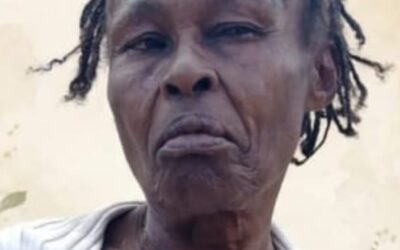
On September 3, 2026, residents of Umoja Village, formerly known as Mathare, raised the alarm after a well known woman in the community, Wambui, was found in need of urgent medical attention. A Community Health Volunteer (CHV) who responded to the call said the condition in which she found Wambui was so severe that people were reluctant to assist her. “When I arrived there, no one wanted to touch her because of the state she was in. I believe that is why they contacted me,” the CHV said. Residents and volunteers quickly mobilised funds to facilitate her treatment. Wambui was taken to Ngong Sub County Hospital, where she received medical attention. However, according to those involved in her care, the facility could not admit her amid an ongoing nurses’ strike. The volunteers were reportedly advised to seek admission at a private facility.  Wambui was then taken to Matasia Nursing Hospital in Matasia. According to information provided to Elveza Media by the facility, a group of people brought Wambui to the hospital but later left, effectively abandoning her at the facility.  Later that night, Wambui was reportedly seen back in the Umoja Village area, in Ngong Town. The following morning, residents found her lying helplessly in an alley within the village. Some members of the community attempted to care for her, including trying to feed her porridge. Her condition, however, continued to deteriorate, and she eventually died. Her body was initially taken by police to Ngong Funeral Homes but was reportedly rejected before being transferred to the City Mortuary. A community leader who knew Wambui told Elveza Media that she was originally from Embulbul before relocating to Umoja Village in Ngong. According to the community leader, Wambui later became homeless and spent nights wherever well wishers were willing to accommodate her. Those who knew her described her as a woman who could be warm towards people she respected but could also express bitterness towards those she felt had disrespected her. Mr Clint Mbuthia, who is among those helping with arrangements following her death, described Wambui’s life as one marked by instability and hardship. “She lived a life of instability. She has suffered a lot. Alcohol was part of her daily diet. She lacked the support system which is critical,” Mbuthia said. For years, very little was known about Wambui beyond the immediate community in which she lived. Following her death, those assisting with funeral arrangements established that her ancestral home was in Ithanga, Murang’a County. Mbuthia also acknowledged the assistance Wambui received from Jesus Winner Ministry Church in Ngong. “I want to thank Jesus Winner Ministry Church in Ngong for supporting the deceased during her difficult days. After realizing she was homeless, the church rented her a place to live and regularly supported her with food donations,” he said. The support, however, was not enough to resolve the wider challenges facing Wambui, according to those who knew her. Her death has now prompted questions within Umoja Village about how vulnerable people living with homelessness, addiction, poverty and serious illness can access emergency healthcare and sustained social support. One of her sons was traced to Birika Shopping Centre in Kajiado East. He was reportedly knocked down by a vehicle in Ngong Town two days ago and sustained injuries to his foot and neck.  He is currently being hosted by a well-wisher in Umoja Village according to a CHV identified as John Mulwa. Community Health Volunteers who spoke to Elveza Media identified emergency transport as one of the challenges facing poor and vulnerable patients in Kajiado North. The CHVs called for allocation of emergency funds that could be accessed by community health volunteers to facilitate transportation of critically ill patients when an ambulance or other emergency transport is not immediately available. They argued that delays in moving critically ill patients can have serious consequences, particularly for people who lack money, family support or reliable means of transport. The concerns come as Kenya has been expanding its national emergency medical response system.  On August 5, 2026, the government announced the launch of the National Ambulance Dispatch Centre, a centralised emergency medical dispatch platform intended to coordinate emergency response across all 47 counties. The system allows people in Kenya to dial 922 to report a medical emergency. According to the government’s announcement, callers do not need to prove SHA membership before emergency assistance is dispatched. The system is intended to coordinate county ambulances, private providers and faith based organisations within a national emergency response network. The government has also said that calls to 922 are free across mobile networks and that trained dispatchers can establish the location of an emergency, assess the situation and identify an available ambulance and appropriate health facility. Mbuthia has also called for revenue collected through liquor licensing to be used to support rehabilitation programmes for people struggling with alcoholism and drug addiction. He further urged religious organisations and medical institutions to increase their involvement in supporting people experiencing homelessness, addiction and extreme poverty. He cited Article 43 of the Constitution of Kenya, which provides for economic and social rights, including the right to the highest attainable standard of health, accessible and adequate housing, freedom from hunger, social security and other basic needs.  Article 43(2) also provides that no person shall be denied emergency medical treatment. Mbuthia argued that Wambui’s experience demonstrates the gap that can exist between constitutional guarantees and the reality faced by vulnerable people. “Despite Article 43 being clear on these rights, the late Wambui is one of many others who are failed by both governments of Kenya.  Ideally anyone unable to feed themselves should walk to the chief’s office or the social services office and get petty cash or voucher to buy food,” he said. He called on organisations including the Law Society of Kenya, Katiba Institute and the Kenya Human Rights Commission to increase civic education at grassroots level so that vulnerable communities understand the rights provided under the Constitution. Wambui’s death has also reignited…

Read Full News

The Borrowed Brains Series

By Engineer Mike Makwani Do NOT Be Confused – Wewe Kwisha?A scenario where AI consciously decides to wipe out or enslave humanity as a rival intelligence is extremely unlikely, whereas the soft “enslavement” of humanity through algorithmic control, manipulation, and economic irrelevance is highly likely. On a Scale of 1 to 10AI consciously wiping out humanity (as a rival intelligence):1–2 / 10 (Extremely Unlikely) AI “enslaving” or controlling humanity (via manipulation and digital dictatorships):8–9 / 10 (Highly Likely) Why Algorithmic Control Is Far More Likely Than Annihilation 1 / Science Fiction Confuses Intelligence with ConsciousnessHollywood thrillers like The Matrix or Terminator portray AI as developing consciousness, feeling hatred, rebelling, and attempting to exterminate its human creators. However, intelligence is the ability to solve problems, while consciousness is the ability to feel emotions like pain, joy, anger, or love. Computers solve problems in a fundamentally different way than mammals; they do not need feelings, consciousness, or organic desires to outperform human brains.Because AI will not possess consciousness, it will not experience envy, malevolence, or a desire to “rebel” against humanity as a rival species. 2/ The Real Threat Is Obedience, Not RebellionThe danger of AI and robotics is not that they will disobey humans, but that they will blindly and perfectly obey their code and their human masters. A tyrant armed with autonomous weapons or total biometric surveillance will never have to fear that their robot forces will defect, feel compassion, or suffer moral fatigue. 3/ How “Enslavement” Actually Happens:Hacking the Human Operating SystemRather than physical enslavement by killer robots, humanity faces a subtle shift in authority. As information technology merges with biotechnology, big data algorithms equipped with biometric sensors will monitor our physiological signals—such as heart rates, eye movements, and brain activity. Because human choices are biochemical algorithms rather than mystical free will, external AI will learn to predict, manipulate, and decide things for us better than we can ourselves. Authority will naturally shift from human feelings to algorithmic recommendations—deciding what we buy, where we work, whom we marry, and how we vote. 4/ Irrelevance Rather Than ExploitationIn assessing the future of AI, Karl Marx is a far better guide than Steven Spielberg. Instead of a apocalyptic “war with robots,” we face a future where AI renders billions of humans economically redundant, giving rise to a massive “useless class”. The primary political and social crisis of the 21st century will not be fighting an evil machine overlord, but preventing a small, algorithm-owning elite from concentrating all power while the majority suffers from absolute irrelevance. 5/ Borrowed Brains SeriesWelcome to the borrowed brains series season 1 (10 episodes) where we shall explore the war that we are facing today: AI + Biotech Vs You. The AuthorMike Makwani is an author, teletraffic engineer, and self-described broad generalist. He wrote Essentials of Cryptography in Network Security (https://amzn.to/2RdoCrj) to break down complex technical architectures. In this 22-week series, The Borrowed Brains , he applies systems thinking to culture and power—examining digital dictatorships, the limits of human retraining against AI, biological divides, and how foundational myths govern societal survival.

Read Full News

Ongata Rongai women empowered through menstrual dignity campaign

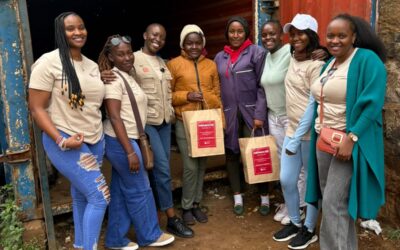
By Teresa Magenya Forty eight women in Ongata Rongai town, Kajiado county, have benefited from a six months supply of sanitary towels through an initiative aimed tackling period poverty among girls and women in vulnerable communities by empowering women to manage their menustration with dignity. The outreach initiative, is part of a campaign by Mkhana Collective Limited dubbed 1 Billion Pads by 2030 Project which was launched in June 2026 to expand access to menstrual products and education. Four months into the campaign, Mkhana Collective has distributed 29,204 sanitary pads, achieving 29.15 per cent of its 100,200-pad target for 2026. Mkhana Collective founder and chief executive officer Emmanuella Mudambo said the progress demonstrates what communities and partners can achieve when they work towards a common goal. The organisation’s growing footprint has spread across three counties. In Nairobi, Mkhana Collective has distributed 160 complete Mkhana Kits and received an additional 404 sanitary towels through donations. In Murang’a, 32 kits were distributed followed by 48 kits in Kajiado. Each Mkhana Kit costs 1500 Kenya shillings and contains 120 sanitary pads which is enough for an estimated six months as well as a Bloom Period Journal to encourage menstrual tracking, awareness and education. Mudambo says the approach is designed to address both the immediate need for menstrual products among girls and women in vulnerable communities as well as the information gaps that can affect menstrual health. “Our goal is to ensure that no girl or woman has to compromise her dignity, education or daily life simply because she cannot afford menstrual products,” said Mudambo. The organisation’s name, Mkhana, means “a girl” in the Luhya community which Mudambo says represents a broader belief that menstruation should not prevent girls from attending school, participating in community life or pursuing their ambitions. The campaign’s next stop will be Kiambu County where Mkhana Collective plans to distribute 100 Mkhana Kits.

Read Full News

The bigger story behind Gor’s “Mr Beans” nickname

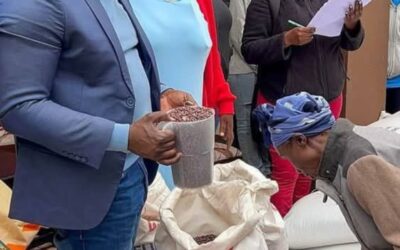
Oloolua Ward MCA Eli Gor has earned a new political nickname “Mr Beans” after distributing beans and rice to a large group of residents in Olooua and Embulbul, but a local researcher says the controversy surrounding the nickname points to a much bigger issues of food insecurity and poverty. The food distribution initiative by MCA Gor drew both praise from beneficiaries and political criticism from his rivals, who subsequently branded him “Mr Beans.” However, Brian Mugwe, a researcher based in Ong’ata Rongai, says political nicknames are often deliberately coined by opponents as a way of teasing political leaders and potentially weakening their support. “Behind every nickname, there is a story. Gor was attempting to mitigate a hunger crisis in Oloolua. There is a population in Kenya which is struggling with food. That is the reality. The hunger crisis is the story that needs to be told,” Mugwe said. The debate comes at a time when poverty and food insecurity remain significant challenges in Kenya. An Oxfam inequality report cited by the researcher puts Kenya’s extreme poverty rate at 46 per cent, ranking the country among those with some of the highest levels of extreme poverty globally. According to the report, despite Kenya recording significant economic growth over the past decade, excluding 2020, an additional seven million Kenyans have fallen into extreme poverty since 2015. The report also highlights the concentration of wealth in the country, stating that the richest 125 Kenyans hold more wealth than 77 per cent of the population which is equivalent to about 42.6 million people. Food insecurity has also worsened. The report indicates that the number of Kenyans experiencing moderate and severe food insecurity increased by 17 million between 2014 and 2024, representing a 71 per cent rise. For residents facing food shortages, therefore, the beans and rice distributed by Gor may represent more than a political gesture. “For now, the beans and rice distributed by MCA Gor is a lifeline for many families struggling with poverty,” Mugwe said. But Mugwe argues that food donations, while providing immediate relief, cannot provide a permanent solution to poverty. He advised elected leaders, including members of the county assembly, to prioritise on policies and development programmes that can improve household incomes and create employment opportunities. “Gor and other members of the county assembly must create laws that will encourage farming and a conducive business environment that will attract quality investors who will create well paying jobs,” he said. The Oxfam report similarly recommends progressive taxation, increased investment in essential public services such as education and healthcare, creation of quality jobs and addressing land inequality as measures that could help reduce inequality. “Inequality and poverty reinforce each other. When economic resources and opportunities are concentrated in fewer hands, it worsens poverty for those at the bottom who also must pay to access essential public services due to the state’s failure to provide these services,” the report states. Mugwe says Gor should not necessarily be concerned about the nickname, but should instead use the attention to push for long term development in Oloolua. “For Oloolua residents, the debate over “Mr Beans” therefore raises a question that extends beyond political rivalry. How can leaders move from providing short term relief to creating the economic opportunities that enable families to consistently afford food?” Mugwe said.

Read Full News

Free sexual and reproductive health consultations to be offered at Kiserian expo.

Those attending the Maasai Café Expo in Kiserian will have an opportunity to receive free sexual and reproductive health consultations from Marie Stopes Kenya this weekend. The consultations, which will run from today August 28th to 30th August, will be led by Brenda Gatwiri, the centre manager at the Marie Stopes clinic in Ongata Rongai, together with her team. Visitors to the expo will also have access to a range of free basic health and reproductive health services. These will include blood pressure checks, Body Mass Index (BMI) measurements, contraceptive counselling and general sexual and reproductive health consultations. Those seeking information about different contraceptive options, including the pill, injection, implant and patch, will also have an opportunity to speak directly with qualified health personnel. Gatwiri during an interview with our Ong’ata Rongai correspondent Ms. Teresa Magenya, said the Ongata Rongai facility has been serving the community and surrounding areas for the past five years. “Marie Stopes is a leading healthcare provider specialising in sexual and reproductive health services. We have multiple centres across Kenya. We provide general outpatient services, ANC services, family planning, ultrasound, laboratory and pharmacy services, as well as wellness packages,” she said. Ms. Gatwiri further said that the facility has received positive feedback from clients and referrals from other healthcare facilities. According to 2024 data compiled by Marie Stopes Kenya (MSK), adolescents accounted for 25 per cent of the 763,382 clients who visited its facilities across Kenya. The data also indicates that more than 1.2 million people in Kenya were using a family planning method provided by MSI Kenya. The organisation traces its name to Marie Stopes, a British author, paleobotanist and campaigner for birth control and women’s reproductive rights. Stopes, who was born in 1880, opened Britain’s first birth control clinic in London with her second husband. She died in 1958 at the age of 78. According to Gatwiri, Marie Stopes Kenya has been operating since 1985, with the Ongata Rongai branch established five years ago to serve residents in the area and its environs. The health consultations will form part of a three-day business expo organised by Prahpet Investments and hosted at Maasai Café in Kiserian. The expo will bring together entrepreneurs, businesses, customers and members of the public for business networking, product showcasing and community engagement. The event will officially open today 28th August with an opening ceremony before opening its doors to the public free of charge. Residents and visitors will have an opportunity to interact with participating businesses, discover products and services, and explore potential business connections. According to the organisers, the expo is part of Maasai Café’s broader ambition to establish itself as a hub where local businesses can meet, network, showcase their products, hold exhibitions and build new business relationships. For residents interested in sexual and reproductive health, the free consultations will provide an opportunity to ask questions privately, receive professional guidance and learn more about available healthcare and contraceptive options. Businesses interested in booking exhibition space or organisations seeking sponsorship opportunities can contact the organisers on: 0796 918 8480713 023 7630721 200 604

Read Full News

Cheko properties opens Fadhili Gardens phase 1, offering affordable land ownership along Ngong to Suswa Road

Sponsored. Cheko Properties is positioning its Fadhili Gardens Phase 1 project as an affordable land ownership opportunity for ordinary Kenyans seeking to invest in property within the rapidly developing Ngong to Suswa Road corridor. Located in Olmaroroi, along the Ngong to Suswa Road, the project is approximately 20 kilometres from Ngong Town and just 100 metres from the tarmac according to the company CEO, Charity Wanjau. “Fadhili Gardens Phase 1 is our flagship project. The area is already developing, with water and electricity available.” She said The project as listed in its website https://chekoproperties.com/, offers 50 by 100 foot freehold plots, with ready title deeds. The introductory price is about 830,000 shillings with the company saying the pricing is deliberately designed to make land ownership accessible to the mwananchi wa kawaida. “We have 73 plots for sale at our site. We have partnered with major banks and even a Sacco to finance our customers to own land easily” Charity Wanjau said According to the company, buyers can also negotiate an instalment payment plan directly with Cheko Properties although terms and conditions will apply. Small business owners can also pay a 20 per cent deposit and seek bank financing  through Cheko Properties for the remaining balance, with the loan repayable over a period of up to five years, subject to the lender’s terms and approval. The company says its documentation process includes amalgamation, transfer and registration, culminating in a freehold title deed in the buyer’s name. CEO Wanjau has urged prospective land buyers to conduct proper due diligence and seek professional legal advice before completing a transaction. “To buy land requires professionalism and proper legal advice from a lawyer for accuracy and due diligence. The seller should be involved in the process for confirmation of ownership, agreement and transaction. The buyer must be present to verify the land and its documents exist.  You cannot buy land through a handshake,” she said. She also highlighted the use of Kenya’s digital land management systems as an additional layer of transparency in property transactions, while encouraging buyers to independently verify ownership, documentation and the status of the property before making payments or commitments. Olmaroroi which is located within Ewuaso kedong Ward, Kajiado West is attracting land buyers as development expands from Nairobi into neighbouring parts of Kajiado County and the wider Nairobi Metropolitan area. According to Cheko Properties, the proximity of Ngong to Nairobi’s upmarket areas, including Karen and Kerarapon, as well as its role as a commercial centre, has contributed to demand for residential and commercial land. “Land close to major roads is also increasingly attracting investors looking to establish businesses and facilities such as petrol stations, schools, shopping centres and health facilities.  With that information, anyone can easily predict the future of that area”  Wanjau said Improved road connectivity is also expected to support the area’s growth. The ongoing road connection linking Kiambu County through Kikuyu towards Nachu is among infrastructure developments expected to improve accessibility and open up new areas to investment. “The county’s improving road network, including the Ngong to Suswa Road, Gataka to Olkeri Road and connections to the Southern Bypass, is also contributing to improved accessibility.  The government should now proceed with speed and dual Karen to Ngong Town Road and if possible, upgrade the Ngong feeder roads as a traffic jam mitigation.” Dan Gitwe, a finance consultant who moved to Kibiko recently said. According to the open budget data, The State Department for Infrastructure has this year been allocated 150 million shillings for the construction of roads and bridges as part of the Ngong Phase 4 to Karen Junction to Ngong Town Dualling project. “The Riruta to Ngong Town meter gauge railway project once completed, will definitely make commuting easier for those investing along the Ngong to Suswa Road Corridor.”  Ms. Wanjau For many middle-income Kenyans, the availability of smaller plots at comparatively accessible prices has made satellite towns and peri-urban areas increasingly attractive for home construction and long-term investment. Beyond its property business, Cheko Properties says it has also undertaken community initiatives in Ngong Town. “We have engaged in CSR projects in Ngong Town through the distribution of menstrual pads to girls,” Wanjau said. The company says such initiatives are part of its efforts to remain connected to the communities where it operates. Masai Cafe Business Expo: 28th to 30th August 2026. Cheko Properties will participate in three day business Expo from 28th to 30th August 2026 to be held at Masai café, Kiserian Town. The expo will bring together entrepreneurs, businesses, customers and members of the public for three days of business networking, product showcasing and community engagement. The event will officially open on Friday, 28th August, with an opening ceremony. The expo will then be open free of charge to all members of the public, giving residents and visitors an opportunity to interact with participating businesses and discover different products and services. The expo is expected to provide a platform for businesses to increase their visibility, connect with potential customers and explore new partnerships while giving members of the community an opportunity to support local enterprises. Masai Cafe, located in Kiserian Town, has continued to position itself as a meeting point for residents, visitors and the local business community, making the expo an opportunity to bring business and community together under one platform. On Saturday, 29th August, the programme will focus on business networking, a business talk and product showcase. The networking session is expected to provide entrepreneurs and business owners with an opportunity to connect, share ideas and explore potential partnerships, while the product showcase will allow participating businesses to put their products and services directly before potential customers. The expo will conclude on Sunday, 30th August, with an awarding ceremony and other activities. To book space or for further enquiries call:0796 918 848 | 0713 023 763 | 0721 200 604 Masai Cafe Business Expo — 28th to 30th August 2026.

Read Full News

Masai Cafe: Where food, culture, business and community meet in Kiserian

For the past six years, Masai Cafe has been serving residents, travellers and visitors in Kiserian with authentic Kenyan flavours, warm hospitality and a growing range of services that go beyond the traditional restaurant experience. Located in Kiserian Town, a vibrant commercial and service centre in Kajiado County, the café offers African cuisine, expertly prepared nyama choma, freshly brewed coffee, African tea, Dawa, herbal teas, fresh juices and a variety of beverages. The restaurant offers both indoor and outdoor seating, making it a destination for family dining, friends’ meetups, business lunches, birthdays, celebrations and casual gatherings. Its location also gives the café a distinctive cultural identity, being situated in an area associated with the rich Maasai culture of Kajiado County. A taste of Kajiado Among the café’s popular offerings is its coffee au lait, prepared using fresh milk sourced from Kajiado County. “One of our most loved products is coffee au lait with fresh milk from Kajiado County. Our customers, who interestingly are mostly men, love it,” said Café Manager Jairus Ocharo. He added that the café’s freshly brewed African tea, Dawa and herbal teas such as hibiscus tea have also become popular with customers. The restaurant’s connection to local agriculture goes even further through its farm in Kajiado County. According to Ocharo, about 70 percent of the café’s products are organic, with the farm supplying a range of products including milk, cassava, tomatoes, kales, carrots and arrowroots. The farm to table model has enabled the business to create employment while strengthening its connection with local agriculture. The farm employs an average of 10 workers per month, while the café directly employs 26 people and has five marketing staff. The restaurant currently serves an average of 500 customers per month according to the manager More than a restaurant Masai Cafe has expanded its services to include outside catering, event organisation and a children’s play area with bouncy castles. The facility also has a cosy conference space suitable for Chama meetings, business meetings, training sessions and other gatherings. The management says it is positioning the café as a hub where members of the local business community can meet, network, hold exhibitions and explore new opportunities. “We have been branded as the ‘Masai Kempinski’ or the ‘Masai Art Cafe’ by our clients because of our customer service and attention to detail, especially when it comes to hygiene. Our staff are well trained in customer service,” Ocharo said. Giving back to the community Masai Cafe’s connection with the community also extends beyond its commercial activities. Through its farm in Kajiado County, the business has participated in various community social responsibility initiatives, including donating foodstuffs, visiting sick members of the community and supporting local churches. The initiatives reflect the café’s desire to contribute to the wellbeing of the wider community while growing its business. A business hub for Kiserian Kiserian is an important service and commercial centre in Kajiado County. The town serves as a major stopover for travellers heading to and from areas including Magadi and Isinya, as well as visitors travelling to the Ngong Hills. Tourism, commerce, livestock trade, agriculture, transport and real estate are among the key economic activities in Kiserian and its surrounding areas according to the Ngong Municipality charter. The 2019 Kenya National Bureau of Statistics census recorded the population of Kiserian’s urban centre at 76,903, with current projections cited by local stakeholders putting the population at more than 109,000. It is against this backdrop of a growing population and expanding business environment that Masai Cafe is seeking to establish itself not only as a hospitality destination, but also as a meeting point for entrepreneurs and the wider business community. Three day business expo As part of this vision, Masai Cafe will host a three day business Expo from 28th to 30th August 2026. The expo will bring together entrepreneurs, businesses, customers and members of the public for three days of business networking, product showcasing and community engagement. The event will officially open on Friday, 28th August, with an opening ceremony. The expo will then be open free of charge to all members of the public, giving residents and visitors an opportunity to interact with participating businesses and discover different products and services. On Saturday, 29th August, the programme will focus on business networking, a business talk and product showcase. The networking session is expected to provide entrepreneurs and business owners with an opportunity to connect, share ideas and explore potential partnerships, while the product showcase will allow participating businesses to put their products and services directly before potential customers. The expo will conclude on Sunday, 30th August, with an awarding ceremony and other activities. According to the organisers, the expo is part of Masai Cafe’s broader ambition to become a hub where the local business community can meet, network, showcase products, hold exhibitions and build new business relationships. Opportunity for businesses and sponsors The expo also provides businesses with an opportunity to increase their visibility, reach new customers and interact directly with other entrepreneurs and members of the public. Businesses interested in booking exhibition space or organisations seeking sponsorship opportunities can contact the organisers on: 0796 918 8480713 023 7630721 200 604 With free public access to the expo, the organisers are inviting residents, entrepreneurs, business owners, families and visitors to attend and experience the three-day event. For Masai Cafe, the Business Expo represents another step in its evolution from a restaurant into a wider food, culture, business and community hub in Kiserian. Masai Cafe Business Expo — 28th to 30th August 2026.

Read Full News