








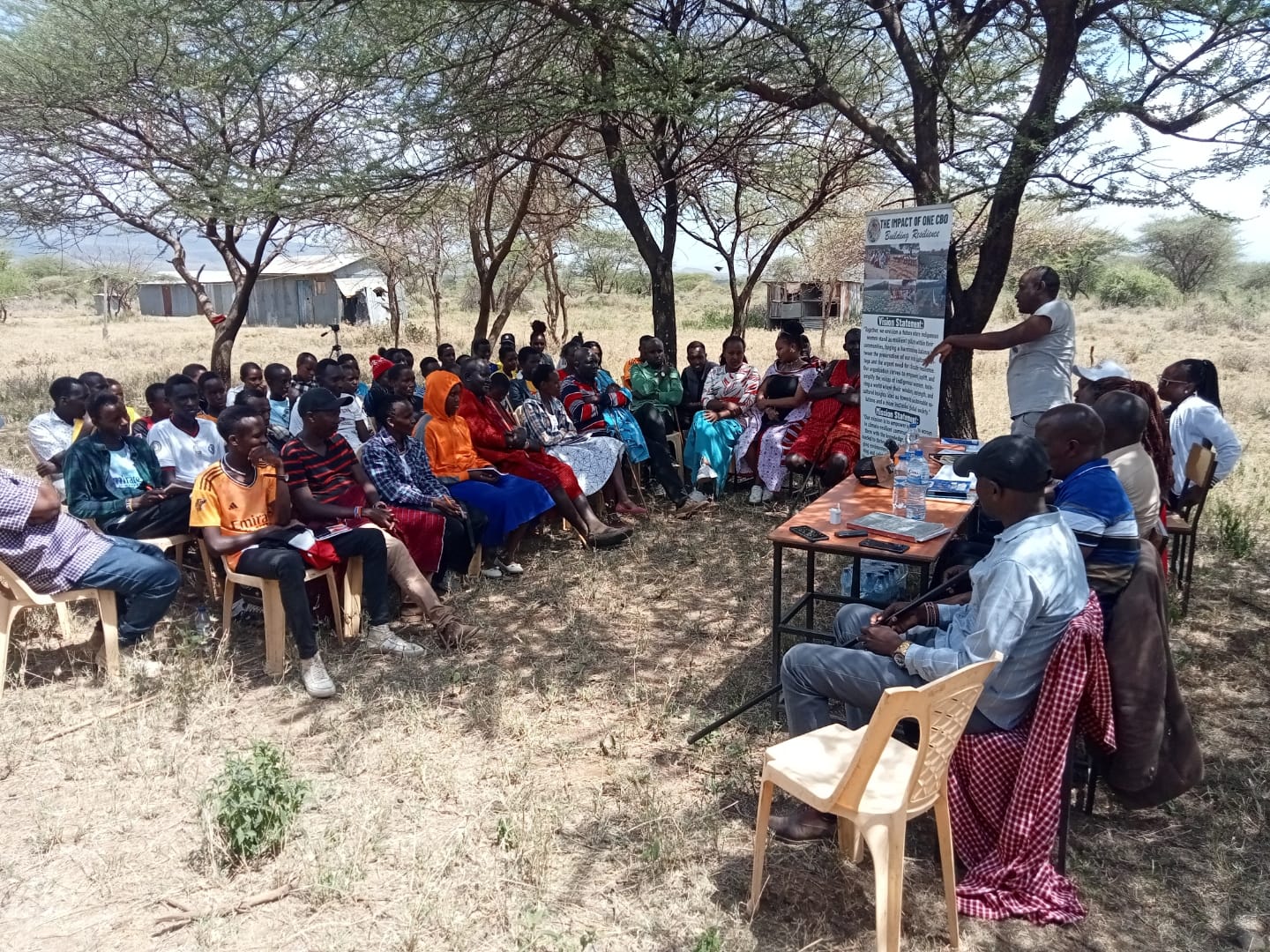
A coalition of community-based organizations, university students and school alumni has launched a push to address teenage pregnancies, early marriages and school dropouts in Iparakuo village, one of Kajiado West sub-county’s most marginalized villages.
The sensitization forum, held at a local primary school in Iparakuo, brought together learners, parents and local leaders in an effort to confront social, cultural and infrastructural barriers that continue to undermine education in the area.
Grace Naserian, a representative of Impact of One, said the village was deliberately selected after research identified it as a hotspot for teenage pregnancies, school dropouts and low civic engagement.
“We came here to create awareness and to empower both learners and parents. Education is the foundation for everything, yet many families here lack access to information and support. This was also our way of giving back to the community and motivating learners to stay in school,” Naserian said.
For Naserian, who has previously volunteered as a teacher at the school for two years after completing secondary education, she described the village as her home.
“I have taught some of these learners’ older siblings. Seeing many of them now finishing form four and moving to college motivates me. This place matters to me, and that is why I feel responsible for its future,” said Naserian.
Naserian also highlighted a shift in attitudes among parents, recounting conversations with older community members who regret missing out on education but are determined to keep their children in school.
“It reflects how people now understand the value of education. Some parents even express a desire to return to school themselves. There are no limits to learning,” added Naserian.

Josephine Leloi, an alumni of the school and one of the organizers, said the community continues to face multiple, interconnected challenges. She noted that boys often drop out of school to engage in small businesses or work as motorcycle taxi riders, while girls leave school due to pregnancy or early marriage sometimes by choice.
“Pregnancy is not the only issue. Some girls do not see the importance of education and opt to get married even when their parents are trying their best to support them,” Leloi said.
She added that the school lacks resources especially under the new competency-based education system where learners do not have access to a modern laboratory making it impossible to carry out mandatory practical lessons.
Beyond academic challenges, Leloi has raised concerns over student safety as a result of frequent invasions by elephants which have destroyed water tanks and posed a threat to learners commuting to and from school, an issue she said has not been adequately addressed by authorities including the Kenya Wildlife Service.
“Students live with constant fear. They worry not only about their studies but also about whether they will reach school or return home safely,” said Leloi.
Dr. Emmanuel Wanyonyi, a lecturer at Daystar University and member of Sense Eight group, has cited the need to empower marginalized and vulnerable members of the society.
“We started with Iparakuo because we received reports of the large number of high school dropouts especially with the young men who would rather be bodaboda riders than pursue education,” said Wanyonyi.
During the visit, partners donated sanitary towels, food supplies and clothing to support learners during the long holiday period which is when the highest school dropout rates are observed.
Samuel Saitoti, secretary of Impact of One, has said the organization focuses on youth empowerment, climate-smart agriculture for women and school retention programs.
“Cultural practices can also contribute to school dropouts. After circumcision, some boys believe they are already men and lose interest in school. That is why mentorship and community involvement are critical. This engagement was successful because we involved students, parents, partners, ” said Saitoti.
The sensitization forum aimed not only to highlight challenges but also to provide visible role models. With few graduates in the area, alumni involvement was intended to show learners that success is possible despite adversity.
“This community needs hope and hope begins when learners see someone from here who made it,” concluded Leloi.
By Amy Moyi