







Wambui urges Seki to champion residents rights on land rates

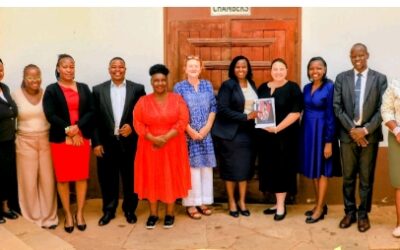
Lawyer Shadrack Wambui has called on Kajiado Senator Kanar Ole Seki to take a more active role in defending the rights and interests of ordinary residents on the contentious issue of land rates in Kajiado county. Speaking during a church service at PCEA Ongata Rongai Chapel in Kajiado North, attended by senator Seki alongside several other leaders from Kajiado county, Wambui has challenged Seki to ensure that the voices of local residents are heard and their concerns addressed at both the county and national levels. Addressing the congregation, Wambui has urged Seki to not only focus on national political issues like his support for the former deputy president Rigathi Gachagua,  but also on matters directly affecting the people who elected him. “You are our watchman. As our watchman, besides fighting for the rights of people at the top as we have seen you standing with Gachagua, try and fight for the rights of the people down here,” Wambui said. Wambui has further called on Seki to use his position in the senate to raise the matter and engage directly with the Kajiado county government in search of a fair and lasting solution citing that Seki has a duty to ensure that residents concerns are represented at the highest levels of government. The remarks by Wambui are centred on the ongoing dispute over land rates for both freehold and leasehold property owners in Kajiado county. The issue has become a major concern among residents following the passage of the Kajiado County Finance Bill 2026 by the Kajiado County Assembly. According to Wambui, the new legislation significantly increases land rates despite an earlier court ruling that declared a previous increase by the county government unconstitutional. Wambui argues that the county authorities should have respected the court’s decision instead of introducing another increase that places additional financial burdens on landowners. Through Sheria Mtaani Na Shadrack Wambui, Wambui has for the second time moved to court to challenge the implementation of the new rates in a case seeks to protect residents from what he has termed as unfair and unlawful charges imposed by the county government. Wambui has noted that many families and property owners are already struggling with the rising cost of living and should not be subjected to further financial pressure through increased land rates. He has maintained that public participation, transparency and adherence to court decisions must guide all county taxation policies. The land rates dispute continues to attract significant public interest across Kajiado county with many residents closely following the court proceedings and awaiting a final determination. 

Read Full News

Elderly man arrested for sexual exploitation of Kware teenagers

A 71 year old man from Ngong town has been arrested for alleged sexual exploitation against teenage girls from Kware village, Nkaimurunya Ward. At the centre of the case, which has sent shockwaves across Kware, is a kindergarten teacher in her early 30’s who resides in Kware. She is alleged to have been recruiting vulnerable teenage girls from Kware to be sexually exploited by the elderly man at his home in Ngong town. The kindergarten teacher, who runs a daycare centre in Kware with her mother, is alleged to have been recruiting the girls on the pretext of connecting them to casual household work in Ngong town. Ongata Rongai police commander Benjamin Kiprono has confirmed that investigations into the incident are ongoing and three girls who who were allegedly lured to be sexually exploited by the elderly man have been identified.  In a statement to Elveza Media, our source to who requested anonymity, has alleged that the day would start with the girls cleaning the house, washing clothes and any other housework they were assigned. They would then be given food to eat, after which they were ordered to have a bath. “Each girl would be given a short t-shirt to wear and instructed not to wear any other clothing. They would then be instructed to go to the bedroom where the alleged rape would happen for several hours,” the source added.  “The girls were also subjected to HIV testing by the man. After several hours of rape, the girls would be paid 2000 Kenya shillings each from which the kindergarten teacher would get a cut of 500 Kenya shillings from each girl as a “sacco contribution”,” said the source. It is alleged that the kindergarten teacher would be present during the rape and record it on video. According to our source, the three girls alleged to have been sexually exploited are from very poor backgrounds. One of the victims is claimed to have been raised by an alcoholic mother in a single roomed house together with her siblings. The house had only a double decker bed and during some nights, the mother would share the lower part of the bed with random men while the children were sleeping on the upper part of the bed. The second victim is claimed to be a married mother of one and the bread winner of the family after her husband was injured last year in a shooting incident.   The third is said to have gone back to the man’s house at least three times. In addition, it is alleged that one of the three girls was recruited while in grade 5 by a fellow victim. During a search by the police, a firearm was discovered in the man’s house. Investigations however revealed the man is a licensed firearm holder.

Read Full News

Kajiado makes big strides in establishing GBV policy frameworks

Kajiado county has marked a pivotal moment in its fight against gender-based violence (GBV) with the launch of the Kajiado County Gender Based Violence Response and Prevention Policy, 2025. The policy, which was unveiled on 24th September 2025, represents a comprehensive framework designed to confront deeply rooted cultural practices and strengthen survivor support systems. The policy, which is tailored specifically to the socio-cultural context of Kajiado, is the result of a year-long collaborative effort spearheaded by the Forum for Women in Development Democracy and Justice (FODDAJ) in collaboration with International Rescue Committee (IRC), Irish Aid and other gender sector stakeholders. It was developed after extensive research and analysis of data from public health facilities, government databases and recovery centers. The new policy comes against a backdrop of alarming statistics that indicate the prevalence of female genital mutilation in Kajiado county is at 78 percent which is far higher than the national average of  21 percent. In the year 2024 alone, 3854 GBV cases were reported with the vast majority of those affected being women and adolescent girls. One of the policy’s standout features is its strong emphasis on prevention through community awareness initiatives, targeted school programs and campaigns to eradicate harmful practices form the backbone of this approach. The policy also recognizes that sustainable change cannot occur without the active involvement of men, boys, cultural leaders, and faith-based institutions which makes their participation essential in transforming entrenched norms and reshaping community attitudes toward GBV. On the response front, the policy outlines clear priorities including strengthening GBV recovery centers, enhancing access to medical and psychosocial support as well as expanding pathways to legal aid. A major advocacy point throughout the policy’s development was the establishment of publicly funded safe shelters. At present, the county relies heavily on privately owned facilities, leaving many survivors without immediate refuge. Improved coordination is another core focus with the policy aiming to reinforce the role of GBV technical working groups, streamline referral pathways, and promote inter-agency collaboration. The document also highlights the need for robust data systems noting that fragmented and inconsistent data collection has long hindered effective planning and monitoring. Subsequently, there are plans for a centralized GBV database developed in partnership with agencies such as the Kenya National Bureau of Statistics(KNBS) and Kenya National Human Rights Commission(KNHCR). Implementation of the policy in Kajiado county will be spearheaded by the County Department of Gender with support from multiple sectors and integrated into the County Integrated Development Plan. Funding is anticipated from county budgetary allocations, national government contributions and development partners. Key policy recommendations include appointing GBV focal persons across all administrative levels, expanding shelters through public–private partnerships, institutionalizing capacity building for frontline workers, and enacting a County GBV Bill to secure long-term financing. As Kajiado embarks on this roadmap, the policy lays the foundation for transformative change in the prevention of GBV and the protection of survivors. By Amy Moyi  

Read Full News

Extravagance or justified chopper rides?

Two helicopters bearing a striking resemblance have been observed ferrying prominent Kajiado politicians to the remote area of Olkiramatian in Magadi ward within the past few weeks. The helicopters have been identified to be part of a fleet from a helicopter charter service that provides luxury air services at an average cost of 250 000 Kenya shillings per hour. One helicopter ferried the statehouse controller Katoo Ole Metito, who is also eyeing the coveted Kajiado county gubernatorial seat, and his political allies to a political event. Similarly, the other helicopter ferried Kajiado county governor Joseph Ole Lenku to a house warming party in the same area this week. The images of Lenku cutting a ribbon at the house warming party in Musenke village has caused backlash from a section of netizens who have expressed outrage over the flashy and extravagant lifestyle showcased by politicians at a time when many Kenyans are struggling to meet their basic needs. Musenke village which is located within Olkiramatian area in Kajiado county has 6 primary schools and 2 secondary schools. According to a teacher in the area, Olkiramatian is considered a hard to staff cluster because piped water, electricity and good roads are almost non existent. “Many teachers do not want to work in this area because of the many challenges especially water scarcity,” said the teacher who wished to remain anonymous. Olkiramatian residents depend on Nguruman area for food and other basic necessities or alternatively, Magadi or Kiserian towns which are kilometers away.  

Read Full News