By Amy Moyi
For nearly a decade, plant and animal produce from The 3000 Friends Farm has been supplying food for an estimated 200 residents every month. Located on a seven acre piece of land in Rimpa area, Kajiado county, the farm harnesses solar energy as a lifeline for food production and power supply.
Founded in the year 2016 by Xaverian missionaries of Yarumal, a catholic institution originally from Colombia, their vision was to create an organic farm that could feed the community as well as to serve as a demonstration and training center for sustainable agriculture. Over time, that vision has expanded to include renewable energy.
The farm, which sits on black cotton soil, faces both opportunity and challenge. According to the training manager at The 3000 Friends Farm Emma Kiragu, while the soil is naturally fertile, its compacted structure makes water management difficult. Ensuring efficient irrigation has therefore been central to the farm’s strategy and solar energy emerged as the most practical and sustainable solution.
“The farm supports a community of about 50 people living on-site, as well as over 100 to 200 customers each month who purchase vegetables and other produce. If we want to grow crops throughout the year then irrigation is necessary. We decided to change from electricity to solar energy because it aligns with agroecological principles. The first set of solar panels was installed in the year 2023 and another set was later added to boost the capacity,” said Kiragu.
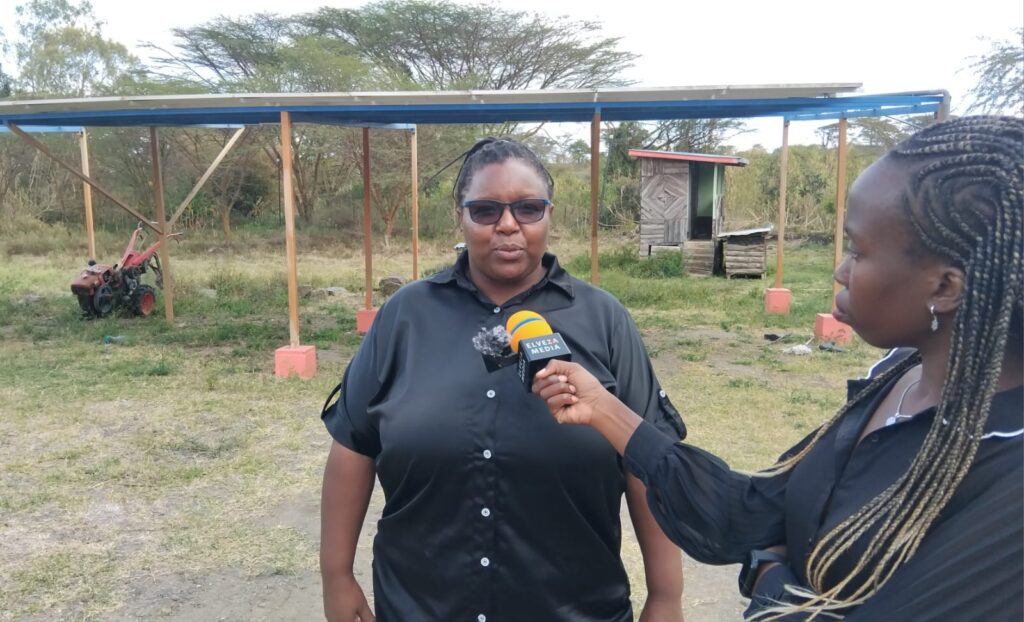
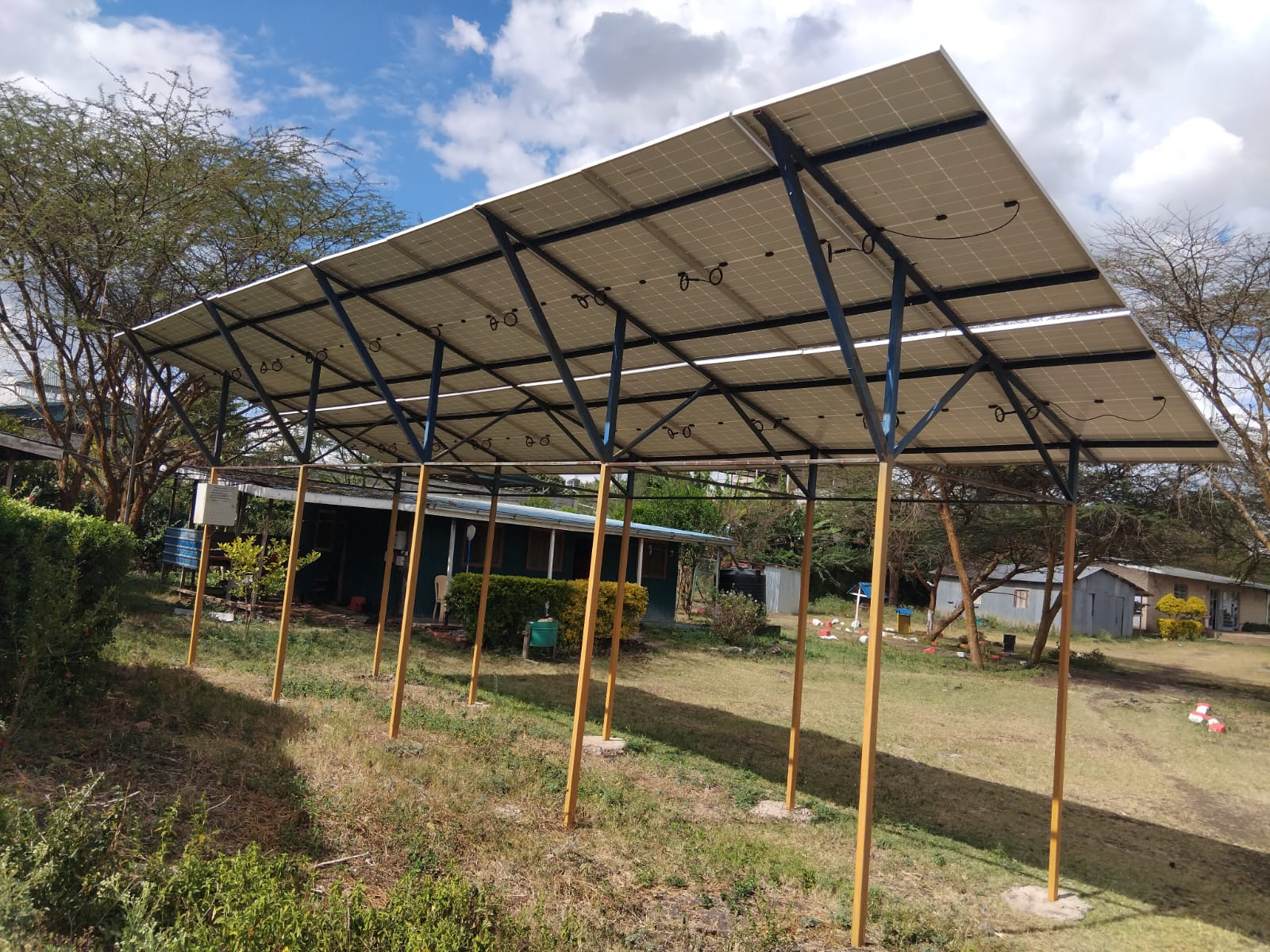
Today, solar panels are installed in two main sections of the farm. One powers water to the farm while the other supplies power to the buildings on the farm. Arthur Munene, a staff at the farm has said the solar system has greatly improved operations at the farm.
“Each set has 18 solar panels. One set is used to pump water for irrigation on the five acres used for farming. Usually, we irrigate the fam every other day but when there is drought, we irrigate daily. The other set of solar panels is used in all buildings on the farm to power lights, fridge, washing machine and other essential needs,” said Munene.
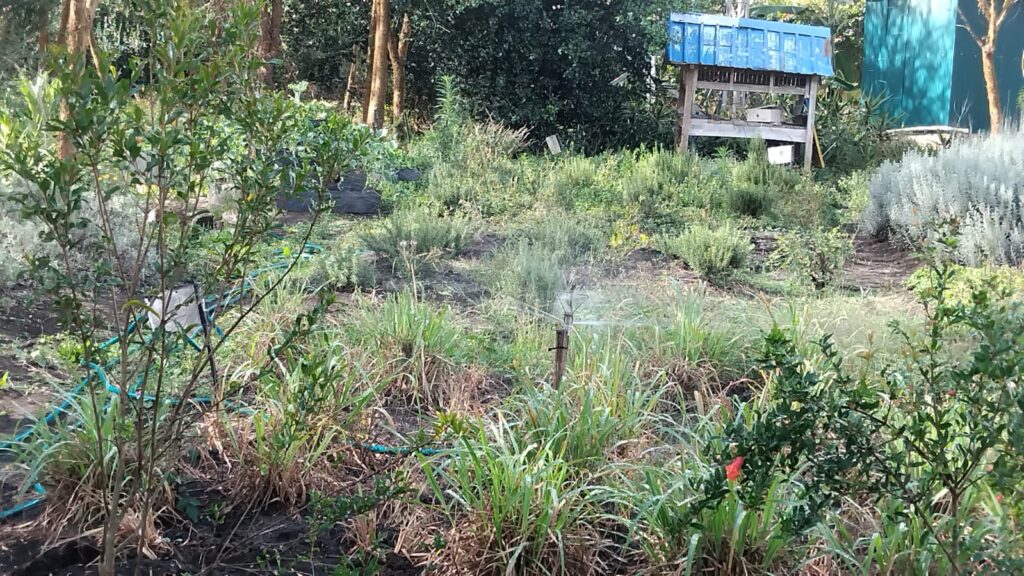
The solar-powered pumps draw water from the borehole into two large tanks each with a capacity of 10,000 liters. From there, water is distributed to the fields using sprinklers while drip irrigation is used in the greenhouses.
The farm grows a wide variety of organic crops and Kiragu has reiterated the importance of intercropping citing that the diversity improves soil health, reduces pest pressure and ensures a steady supply of food.
“Our core business is organic farming and nintey percent of what we consume here is from our farm. We grow almost everything including vegetables, legumes and tubers. We first feed ourselves and then we sell the surplus,” said Kiragu.
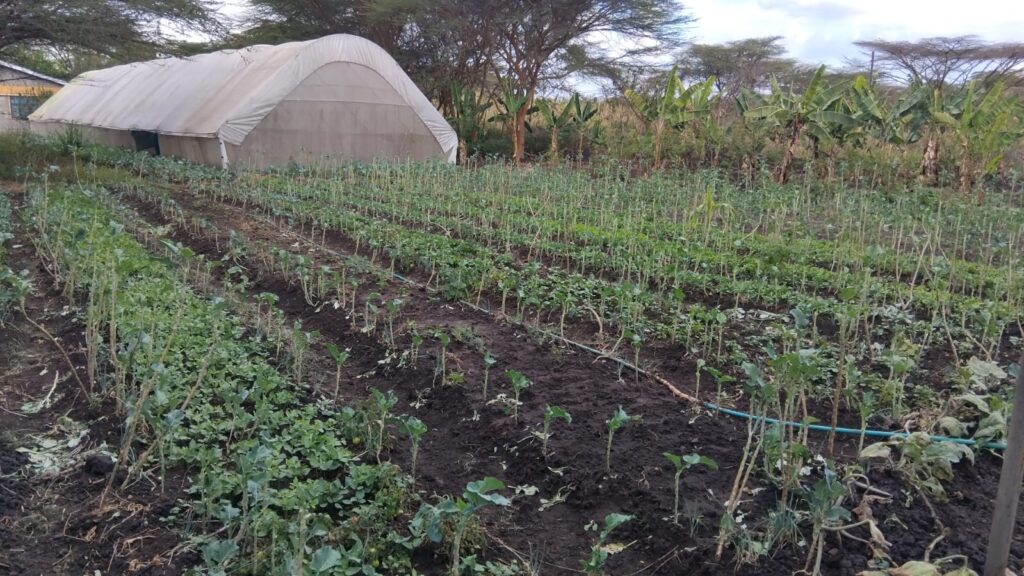
Beyond food production, the farm serves as a training hub. Since the year 2020, more than 500 farmers from Samburu county and about 90 farmers from Kajiado county have been trained in organic farming techniques. Many of these trainees are pastoralists transitioning into small-scale crop farming.
“The pastoralists have the resources for organic farming especially manure but they often underuse them. When they come here, we show them how to turn what they already have into productive farms,” said Kiragu.
Kiragu has said women have been at the center of the training programme noting that empowering them with farming skills has strengthened food security at both the family and community levels.
“In Samburu, women traditionally manage household food. Many women we have trained now maintain kitchen gardens and even sell surplus vegetables. What surprised us is that the women we trained started training others. They became farmer leaders in their communities,” said Kiragu.
Solar energy has also enabled experimentation with water-saving soil techniques.The farm has since shifted from the previous raised beds to sunken beds which according to Kiragu, allows better moisture retention and more precise water measurement.
“ Due to the nature of black cotton soil, raised beds led to water loss and slow absorption. We have adopted sunken beds because we want to know exactly how much water the crops need to determine whether irrigation should be weekly, monthly or seasonal. Solar irrigation allows us to control that process,” explains Kiragu.
Before the transition to solar energy, the farm relied on conventional electricity to pump water for irrigation. Monthly electricity bills could soar to between 70,000 and 100,000 Kenya shillings but the switch to solar power has reduced electricity costs by an estimated 97 percent. Francis Mambo, a seminarian missionary and member of the farm team, has empasized the broader impact of solar adoption.
“Currently, our electricity bills are between 3,000 and 12,000 Kenya shillings at most. The money we save goes back to farm operations. The aim of this farm was to encourage crop production and then take it to missions in dry areas like Samburu and Turkana. Solar has made that possible because those areas lack electricity,” said Mambo.
The produce grown on the farm is sold at affordable prices which according to Mambo, makes fresh vegetables accessible even to low-income households while still allowing the farm to make profit.
“Kales, spinach, tomatoes, onions and herbs are in high demand. People come because they know our prices are fair. A trader can buy vegetables here, sell them and still make a profit. We also make a profit of upto 90,000 Kenya shillings per month,” said Mambo.
In Saikeri area, Kajiado county, residents are also reaping the benefits of solar powered irrigation. Through a 125-foot-deep solar-powered borehole, the pastrolist community has converted over two hectares of the arid communal land into a lush green farm.
According to Samuel Saitoti, secretary of Impact of One organisation, the solar-powered borehole which uses a submersible pump has transformed water access and livelihoods for the community since it began operations in July 2022. Beyond providing water, the borehole has become a hub for small-scale farming by supporting the cultivation of crops such as cabbages and onions
“This system is ideal for dry regions because we have abundant sunshine. The borehole can produce about 17 cubic metres of water per hour which can fill a 10,000-litre tank in one hour. The farming activities have generated funds that are reinvested into the community. We have paid school fees for needy children and supported a feeding programme for the elderly,” said Saitoti.
Saitoti Ole Kikayo who manages the communal farm has said the solar powered irrigation system has enabled several members of the pastrolist community to venture into crop farming to create a long-term solution to the food shortage crisis as a result of frequent drought in Kajiado county.
“As a community, we have we have greatly benefited from this borehole. Previously, there was water scarcity but now there is a reliable water supply. I have stopped nomadic pastrolism and began farming so now I am able to stay home, produce food and earn an income,” said Kikayo.
However, the initiative has not been without challenges particularly during prolonged dry spells. Saitoti has pointed to increased competition for water between people and wildlife in times of drought adding that the community continues to seek sustainable ways to manage the resource while meeting both human and environmental needs.
At the policy level, Kajiado county is working towards formulation of policies to mitigate climate change. The Member of County Assembly for Ngong Ward Mbiriri Mwaura has said the policy is in response to drought due to climate change climate change which has forced the county assembly to rethink mitigation policies.
“We developed the Climate Bill to help reduce the impact of climate change in our county. The development of the bill, which is currently in its public participation stage, is ongoing through the committee of water and environment. We believe it is going to enhance our way of handling climate change within our county,” said Mbiriri.
The Kajiado County Climate Change Bill, 2020 provides for a regulatory framework for enhanced response to climate change in Kajiado county. It seeks to establish a County Climate Change Fund that will be used to fund climate change programs, projects and activities.
In addition,the Bill also obligates the county government to use market-based instruments and other economic inducements to provide incentives for climate change activities including reduction of greenhouse gas emissions and use of renewable energy by local communities.
Through donor funding from the Financing Locally-Led Climate Action (FLLoCA) program, Kajiado county allocated nearly 300 million Kenya shillings in the 2024/2025 financial year towards climate mitigation projects. Part of this funding was used for solarizing water pumps.
“Over five public boreholes within our constituency have been solarised. In Ngong ward alone, we installed solar panels at the booster station at a cost of 4 million Kenya shillings. It is already operational and has greatly improved water supply but there is still room for improvement,” added Mbiriri.
Despite the benefits of solar energy in agriculture, Mambo has said that high solar installation costs remains a barrier for small-scale farmers. However, he believes that collaborative effort is a solution to the high initial solar installation costs because the long-term savings and reliability make it worthwhile.
“Solar infrastructure is costly for small-scale farmers but they can form groups, contribute little by little and invest together in solar power. There are ways to source funds if people work together. On our farm, we were able to install the solar panels through donor funding at a cost of over 1.5 million Kenya shillings,” said Mambo.
With the success of the solar-powered irrigation system at The 3000 Friends Farm, Kiragu has expressed optimism for the future citing plans to further harness renewable energy from the sun.
“We are planning to invest in a solar dryer and a solar fish pump.The dryer will help in the preservation of the surplus produce while the solar fish pump will replace our electric one which broke down. The sun is a natural resource and it is underutilized. Our principle is to optimize the use of natural resources,” said Kiragu.
Meanwhile, Kikayo has become an advocate for farming in his community in Saikeri after reaping the benefits made possible by the communal solar-powered borehole.
“I no longer have to move from place to place to look for pasture. In the future, I plan on keeping just two dairy cattle. These days, I advise everyone in my community including my sons to practise crop farming because if they do they will not suffer,” said Kikayo.
This story was produced with the support of the African Centre for Media Excellence (ACME) in partnership with the Charles Stewart Mott Foundation.