By Amy Moyi
For the first time, Nancy Mugure is comfortable during her menstruation. For Mugure, the launch of the Inclusifit menstrual underwear in June 2024 has transformed not only her life but the lives of intersex persons who menstruate like herself. Mugure, who has used the menstrual boxer for over six months, notes that the sanitary products available in the Kenyan market did not cater to her menstrual needs as an intersex person who menstruates, but the undergarment has been able to fill this gap.
“I love Inclusifit because it secures all my private parts, unlike other sanitary products, which leave part of them uncovered. I am able to walk comfortably because the fabric is soft, absorbent, and does not leave an odour. When I used the sanitary towels that are available in the market, the menstrual flow would leak because I wasn’t fully secured,” said Mugure.
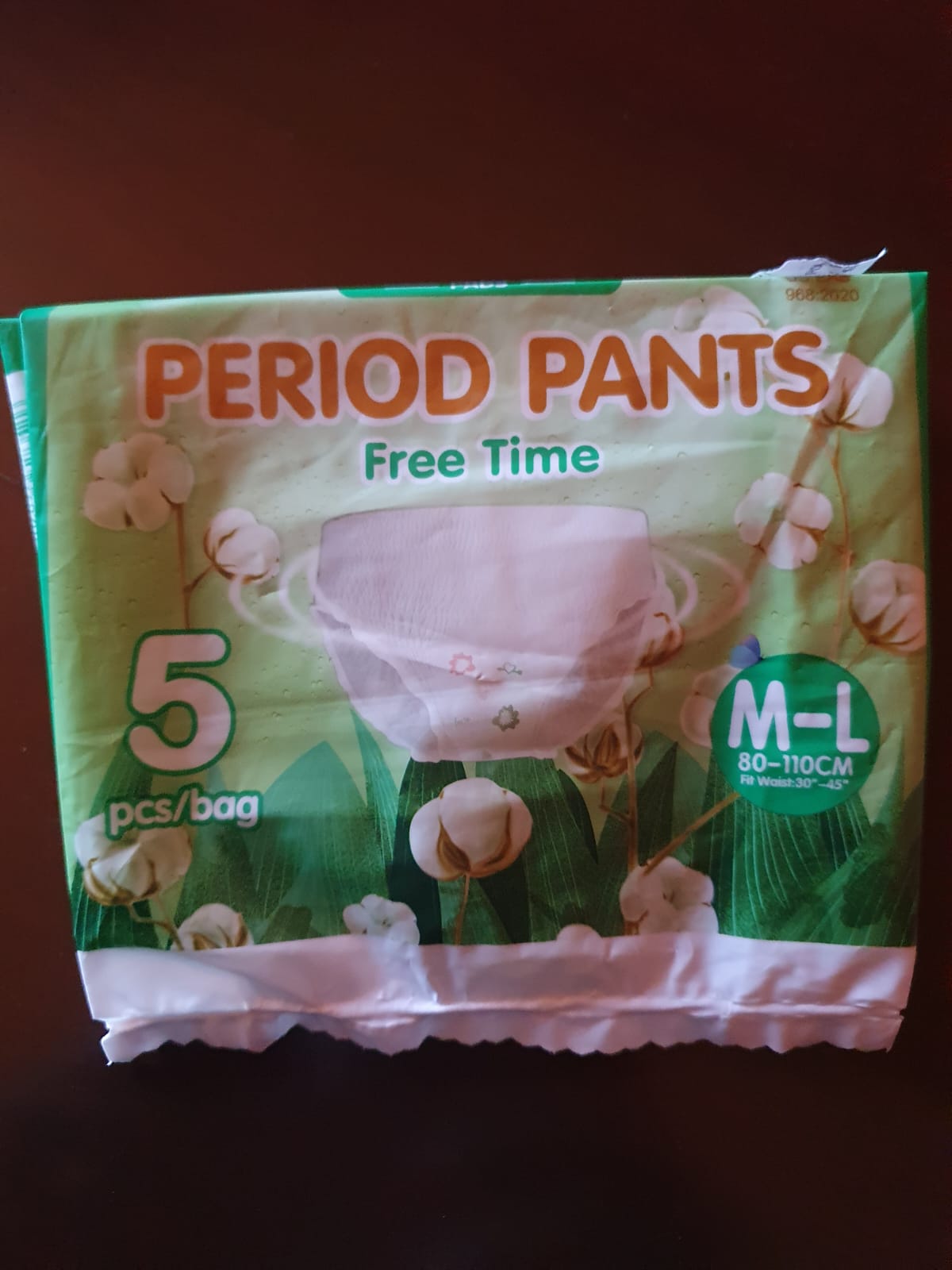
The menstrual boxer is made of a soft cotton and spandex fabric and lined with three layers of different materials to make it highly absorbent.
“I now use one menstrual boxer per day during my monthly periods. It is washable and takes less than thirty minutes to dry. I hang it outside in the shade to increase its durability. Also, I keep watch to prevent theft and people from touching it, ” added Mugure.
Prior to using the underwear, the fear of menstrual blood leaking in public, coupled with the societal stigma around menstruation still faced by women and girls in Kenya today, forced Mugure to isolate for several days during her monthly period. Her withdrawal from normality negatively impacted her quality of life.
“My mental health was affected because of the stigma, discrimination and embarrassment in case of a menstrual leak on my trousers became apparent. You see, I’m an intersex person who physically presents as a male. When I was in high school, I missed most classes during my periods. I even had to sit my mathematics paper during the national examinations in the dormitory,” recounts Mugure.
Laura (not her real name) is an athlete who is also experiencing the convenience and practicality offered by Inclusifit. The underwear has given her new freedom and a sense of normalcy to pursue her sports career.
“I take part in high jump as well as 400 and 800 metres races and I find it comfortable enough to use even during my sports activities, says Laura. “I use one menstrual boxer for up to eight hours. Previously, I would have to change sanitary towels every two hours. For the reserved athlete, the last four months have brought a new sense of confidence to their sport.
Frank Kibagendi from the Jinsiangu organisation, which advocates for safe spaces for intersex persons, champions the Inclusifit underwear, which was launched in partnership with Kenya National Commission for Human Rights (KNHCR) and Virtuous, a brand specialising in period underwear. The initiative was spurred in 2023 after research by Jinsiangu and Amka Africa Justice Initiative, a non-profit providing access to justice for the poor, minorities and marginalised groups, found out that 30 out of 41 intersex persons who menstruate reported that there is no menstrual product in the market which meets their needs.
Inclusifit retails for 500 to 2500 Kenya shillings on the Jinsiangu, Virtuous, and Inclusifit websites. However, the menstrual boxer is currently unavailable in supermarkets, making accessibility a challenge.

Kibagendi admits that limitations in accessibility and pricing are barriers to more intersex people benefiting from the underwear. “As an organisation, we are trying to make sure we produce more menstrual boxers so we can reach more intersex people across the country. We are also working towards developing other gender-inclusive products and making Inclusifit cheaper and more affordable. My appeal to the government is to help us in financing the production of these products so that we can give them out to school-going intersex children,” says Kibagendi.
It is encouraging for members of the country’s intersex community that strides are being made towards more visibility and inclusivity, unlike for other sexual minorities. This is evident with the inclusion of the third gender marker for the first time during the 2019 census and now with the proposed Intersex Persons Bill 2024, which is currently at the public participation stage.
The bill seeks to make it illegal to discriminate against intersex persons in the areas of employment, education, and accessing health care, including mental health services.
For the extroverted Mugure, there is still a great need to improve the accessibility of the undergarment so that other intersex persons who menstruate can benefit from the security and practicality that it offers. “Unfortunately, many intersex persons in Kenya are still forced to stay at home during menstruation, but if the menstrual boxer reached them, this could be a thing of the past.
“Personally, it has been life-changing,” asserts Mugure.