By Amy Moyi
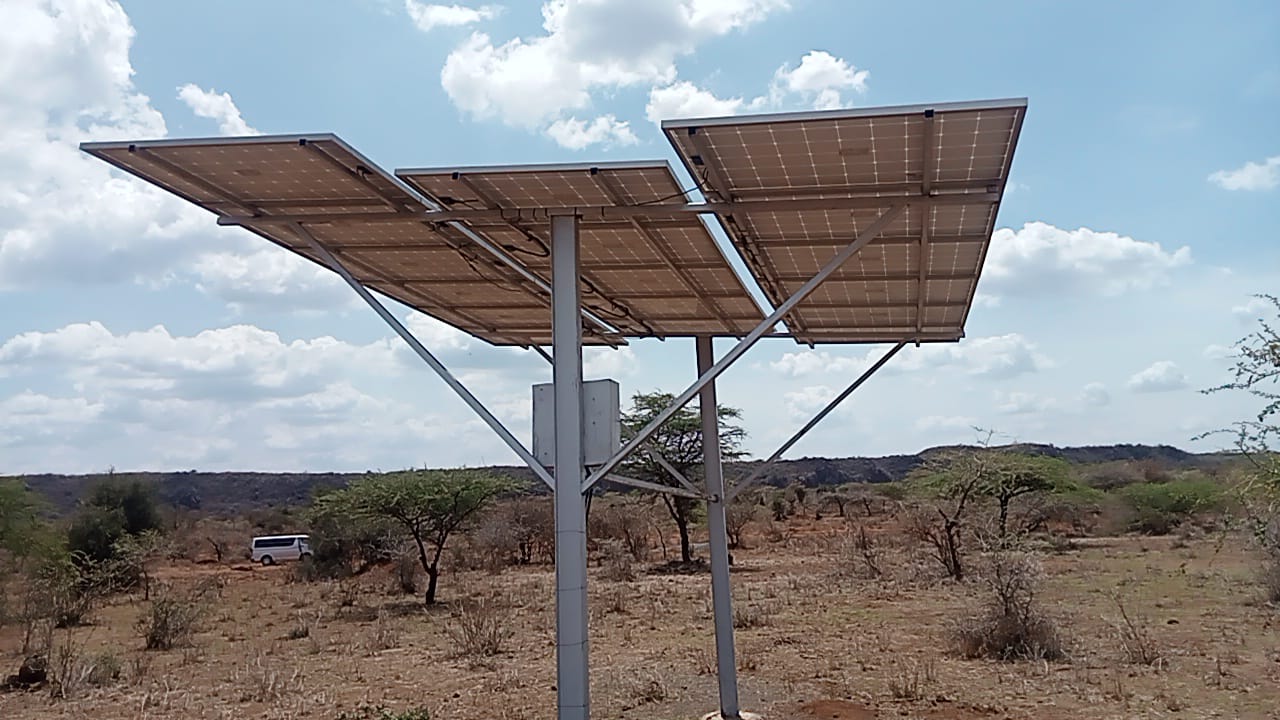
Pastrolists in Ewuaso Kedong area in Kajiado county have began adopting crop farming through the use of a solar powered borehole to cushion them against the effects of the prevailing drought. Through solar powered irrigation, the pastrolist community have converted over two hectares of the arid communal land into a lush green farm.
Saitoti Ole Kikayo who manages the communal farm has said the solar powered irrigation system has enabled several members of the pastrolist community to venture into crop farming to create a long-term solution to the food shortage crisis as a result of frequent drought in Kajiado county.
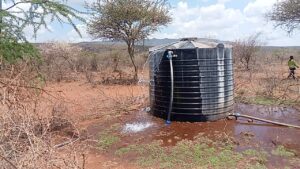
“As a community, we have greatly benefited from this borehole. Previously, there was water scarcity but after this borehole was drilled, there is a reliable water supply throughout the day. I have stopped nomadic pastrolism which involved moving from place to place and began farming so now I am able to stay home and produce food.” said Saitoti.
A report by the National Drought Management Authority report (NDMA) in 2023 indicates that Kajiado County lost 38.8% of its livestock population between September and November 2022. In addition, the pastures of the predominantly pastoralist community have been decreasing as a result of extended drought and the impacts of climate change which had been a threat to their survival and livelihood.
To mitigate the adverse effects of drought, Saitoti has reiterated the importance of crop farming citing that the solar powered irrigation system had enabled him to have access to a sustainable source of food as well as earn an income.
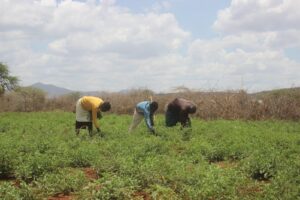
“I grow cabbage, sukuma, maize and managu. On a good day, I earn upwards of a thousand Kenyan shillings and a minimum of seven hundred shillings when sales are low. I also plan to buy two dairy cows for milk production which I can feed with crops from my farm instead of keeping a large herd of livestock.” said Saitoti.
According to the director of Cara Projects Edwina Kwallah, lack of knowledge of farming techniques has been a barrier towards more members of the community embracing crop farming citing that the organisation is launching a farming project that will utilise more of the vast community land using the water supply from the borehole.
“We will provide training on crop farming to at least eighty in the community on crop farming. They will use water from the borehole to grow crops to feed themselves as well as sell the surplus to earn an income.” said Edwina.
The Kajiado county short rains food and nutrition report released in 2023 indicates that over 10 percent of children below 5 years in Kajiado county have been facing malnutrition since July 2022.
Samuel Saitoti, a resident of Ewuaso Kedong ward has said the dire situation of the community including food scarcity prompted him to reach out to well-wishers who helped in providing the funds to drill the solar powered borehole.
“Prolonged drought for years in this area resulted in death of many livestock and food scarcity. It has been very tough and many children dropped out of school because they had nothing to eat. We talked to our friends in the United States who donated money to drill the borehole.”
Saitoti has urged more members of the pastrolist community to take advantage of the availability of the solar irrigation system to adopt a more sustainable way of living though agriculture to improve their standards of living.
“I encourage everyone I interact with, including my children, to practice farming instead of nomadic pastrolism. It is no longer sustainable to keep large herds of cattle because of the increasingly frequent and prolonged drought in this area.” said Saitoti.